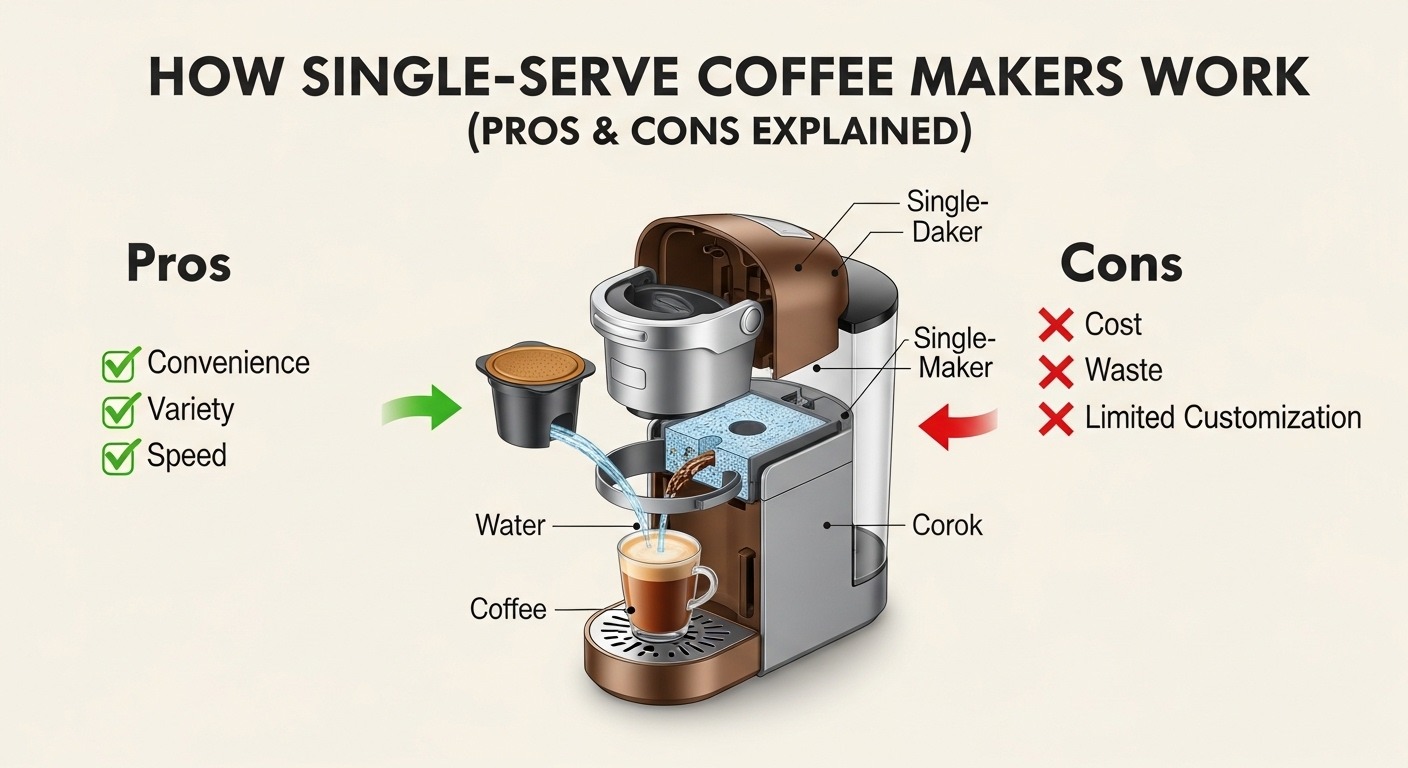
A single-serve coffee maker is a quick brew coffee machine that prepares one cup at a time using pre-measured coffee pods or capsules. It heats water, forces it through the pod under pressure, and delivers coffee directly into your mug within 1–2 minutes.
You wake up. You want coffee. Not a full pot. Not a complicated setup. Just one cup, fast. That is where single-serve machines changed the market.
Traditional drip coffee makers brew 8–12 cups at once. Much of it goes to waste. According to the U.S. National Coffee Association, over 60% of U.S. adults drink coffee daily, and convenience ranks as a top purchasing factor. Consumers wanted speed and consistency. Manufacturers responded with pod-based systems.
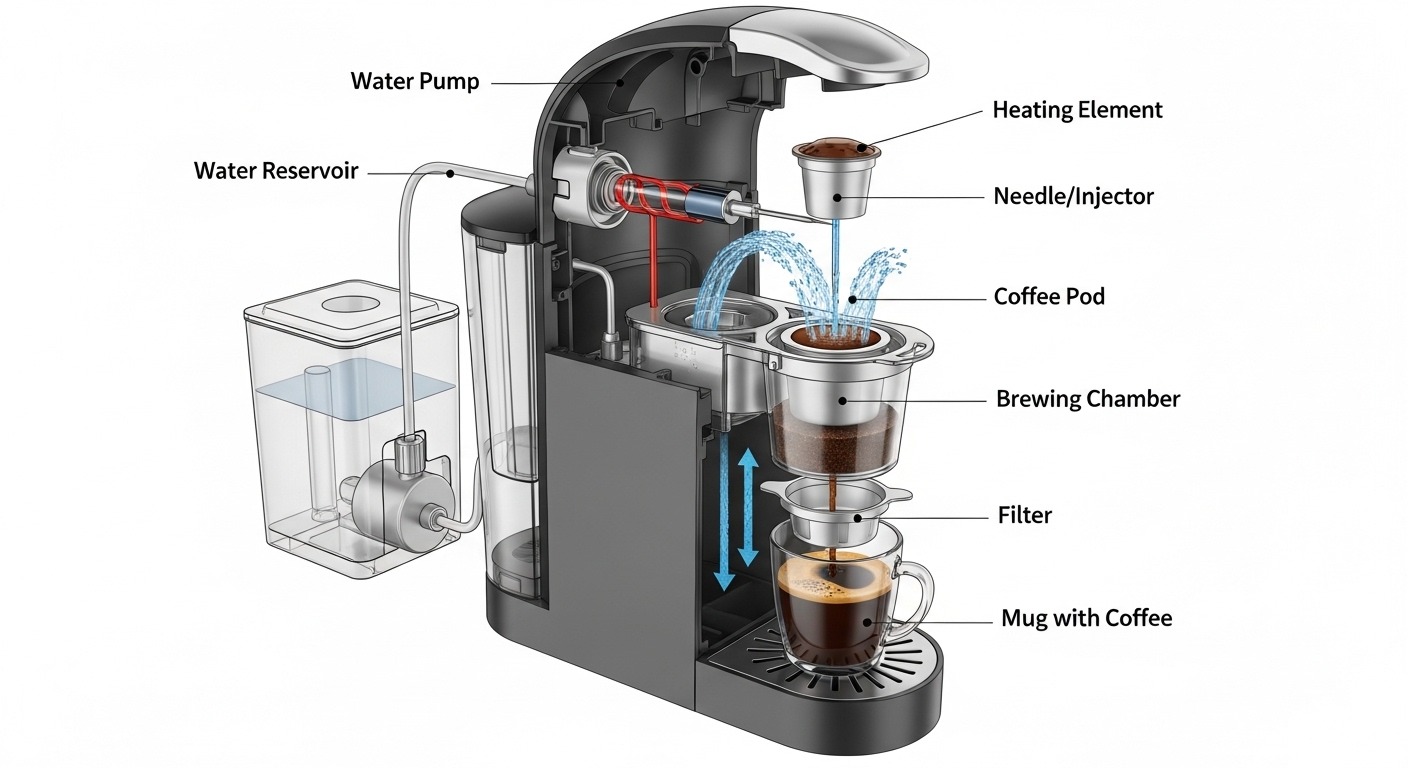
A single-serve coffee machine works using four core components:
- Water reservoir
- Heating element
- Pump mechanism
- Pod chamber with needle puncture system
Here is the simplified brewing cycle:
- You insert a pod.
- The machine punctures the pod top and bottom.
- Water heats to approximately 192°F–205°F (optimal extraction range).
- Hot water is forced through ground coffee under pressure.
- Coffee extracts directly into your cup.
The entire process typically takes 60–90 seconds. That speed defines the quick brew coffee machine category.
How Does the Internal Brewing Mechanism Actually Extract Coffee?
Short answer: The machine uses pressurized hot water to extract soluble compounds from finely ground coffee sealed inside a pod.
Coffee extraction depends on temperature, pressure, grind size, and contact time. Single-serve machines control these variables automatically.
1. Water Heating System
Most machines use a thermoblock or boiler heating system. Thermoblocks heat water on demand, reducing standby energy use. Boilers store hot water continuously, which can increase electricity consumption.
2. Pressure Control
Standard drip coffee uses gravity. Pod machines use pressure. Entry-level models operate at 1–3 bars of pressure. Espresso-focused capsule machines can reach 15–19 bars.
Pressure increases extraction efficiency and produces crema in espresso-style drinks.
3. Pod Design and Sealing
The pod contains pre-measured grounds sealed for freshness. Oxygen exposure is limited, extending shelf life compared to loose ground coffee.
When the machine punctures the pod, water flows evenly across the grounds. This reduces user error.
This automation solves a common problem: inconsistent brew strength.
What Is Pod Compatibility and Why Does It Matter?
Short answer: Pod compatibility refers to whether a coffee machine can use different capsule brands or only proprietary pods.
This is where buyers often make mistakes.
Some machines are closed systems. They only accept specific branded pods. Others are open systems and allow third-party capsules or reusable pods.
Closed System
- Limited to manufacturer pods
- Consistent performance
- Higher long-term cost
Open System
- Compatible with multiple brands
- Reusable pod options available
- Lower cost per cup
Why does this matter?
Cost per cup varies significantly:
| Type | Average Cost per Cup |
|---|---|
| Proprietary Capsule | $0.70–$1.20 |
| Third-Party Pod | $0.40–$0.70 |
| Reusable Pod + Ground Coffee | $0.20–$0.35 |
Over one year, drinking one cup daily, the difference can exceed $300.
Pod compatibility directly affects budget, sustainability, and flavor variety.
What Are the Main Advantages of a Single-Serve Coffee Maker?
Short answer: Speed, consistency, minimal cleanup, and portion control are the primary benefits.
Let us break it down.
1. Speed
Most machines brew in under two minutes. This is significantly faster than grinding beans and preparing manual pour-over or espresso.
2. Consistency
Pods contain standardized coffee amounts. The machine controls water temperature and volume. You get the same result each time.
3. Convenience
No filters to measure. No grounds to scoop. Minimal mess. Remove the pod. Done.
4. Space Efficiency
Many single-serve machines measure under 8 inches wide. Ideal for small kitchens, dorm rooms, or offices.
5. Reduced Waste (Per Brew)
Brewing only one cup avoids leftover coffee waste common with full-pot machines.
For households where members drink at different times, this flexibility matters.
What Are the Disadvantages You Should Know Before Buying?
Short answer: Higher cost per cup, limited control, environmental concerns, and dependence on pod availability.
Convenience comes at a price.
1. Long-Term Cost
Pod-based systems cost more than traditional drip coffee over time. The pre-packaging increases production costs.
2. Environmental Impact
Billions of coffee pods are discarded annually. Some brands offer recycling programs, but participation rates vary. Reusable pods reduce waste but require cleaning.
3. Limited Customization
You cannot easily adjust grind size or extraction time. Advanced users may feel restricted.
4. Mechanical Complexity
More moving parts mean more maintenance. Descaling every 2–3 months is required to prevent mineral buildup.
Are Single-Serve Coffee Makers Energy Efficient?
Short answer: Yes, if used occasionally. Less efficient if left on standby all day.
Energy usage depends on heating design.
- Thermoblock systems heat water only when brewing.
- Boiler systems maintain hot water continuously.
Energy Star-rated machines often include auto shut-off features after 5–30 minutes of inactivity. This reduces electricity consumption significantly.
Compared to keeping a drip machine’s warming plate active for hours, single-cup systems may consume less energy overall.
How Do Single-Serve Machines Compare to Traditional Drip Coffee Makers?
Short answer: Single-serve machines prioritize convenience and speed. Drip machines prioritize volume and cost efficiency.
| Feature | Single-Serve | Drip Coffee Maker |
|---|---|---|
| Brew Time | 1–2 minutes | 5–10 minutes |
| Cost per Cup | Higher | Lower |
| Customization | Limited | Moderate |
| Best For | One person | Multiple users |
If you drink multiple cups daily, drip may be more economical. If you drink one cup at irregular times, a quick brew coffee machine makes sense.
Who Should Buy a Single-Serve Coffee Maker?
Short answer: Ideal for individuals, small households, offices, students, and anyone prioritizing convenience over customization.
It works best when:
- You drink 1–2 cups per day.
- You value speed in the morning.
- Kitchen space is limited.
- You prefer minimal cleanup.
It may not suit:
- Large families
- Heavy coffee drinkers (3+ cups daily)
- Manual brewing enthusiasts
Conclusion: Is a Single-Serve Coffee Maker Worth It?
A single-serve coffee maker solves a clear problem: fast, predictable coffee with minimal effort. It eliminates measuring, reduces mess, and delivers consistent results. For busy professionals, students, or single-cup drinkers, it makes daily routines easier.
But it is not perfect. Pod compatibility affects long-term cost. Environmental concerns require attention. And flavor control remains limited compared to manual brewing methods.
Before buying, calculate your daily coffee consumption. Compare cost per cup. Check pod compatibility. Consider whether speed outweighs customization for your lifestyle.
If convenience matters most, a quick brew coffee machine can be a practical upgrade. If flavor experimentation matters more, you may prefer traditional methods.
Next step: Evaluate your daily usage and choose a machine that matches your budget, pod flexibility needs, and brewing preferences.
Frequently Asked Questions (FAQs)
1. Do single-serve coffee makers make real espresso?
Some capsule machines generate 15+ bars of pressure, which qualifies as espresso extraction. However, flavor complexity may differ from commercial espresso machines.
2. Can I use ground coffee instead of pods?
Yes, if the machine supports reusable pods. This improves pod compatibility and reduces cost per cup.
3. How often should I descale a single-serve machine?
Descale every 2–3 months, or after 200–300 brews, depending on water hardness.
4. Are coffee pods recyclable?
Some aluminum and plastic pods are recyclable through manufacturer programs. Always check local recycling guidelines.
5. How long does a single-serve coffee maker last?
Average lifespan is 3–5 years with regular maintenance. Descaling extends performance.
6. Does pod coffee taste weaker?
Not necessarily. Strength depends on pod formulation and brew size settings. Many machines allow cup size adjustment.
7. Is a quick brew coffee machine good for offices?
Yes. It minimizes cleanup, reduces waiting time, and allows different beverage choices without brewing full pots.
Related Topics: How to Style a King Size Bedroom Set Easily
What Next: Is HVAC A Good Trade to Learn