There is something deeply personal about making pasta by hand. In kitchens across Italy, the ritual has not changed much in generations. Even today, with electric gadgets filling store shelves, many Italian home cooks reach for a manual tool. They roll, press, and cut with practiced ease. The result is pasta that carries a certain texture and soul that machines simply cannot replicate.
So why do so many people still hold on to this old-fashioned approach? The answer goes beyond nostalgia. It touches on culture, craft, control, and the deep connection Italians feel toward their food.
The Cultural Roots of Manual Pasta Making
Italy has a long and proud food history. Each region has its own pasta shapes, sauces, and traditions. From the egg-rich tagliatelle of Bologna to the thin spaghetti of Naples, pasta is an expression of identity. Therefore, the tools used to make it carry meaning too.
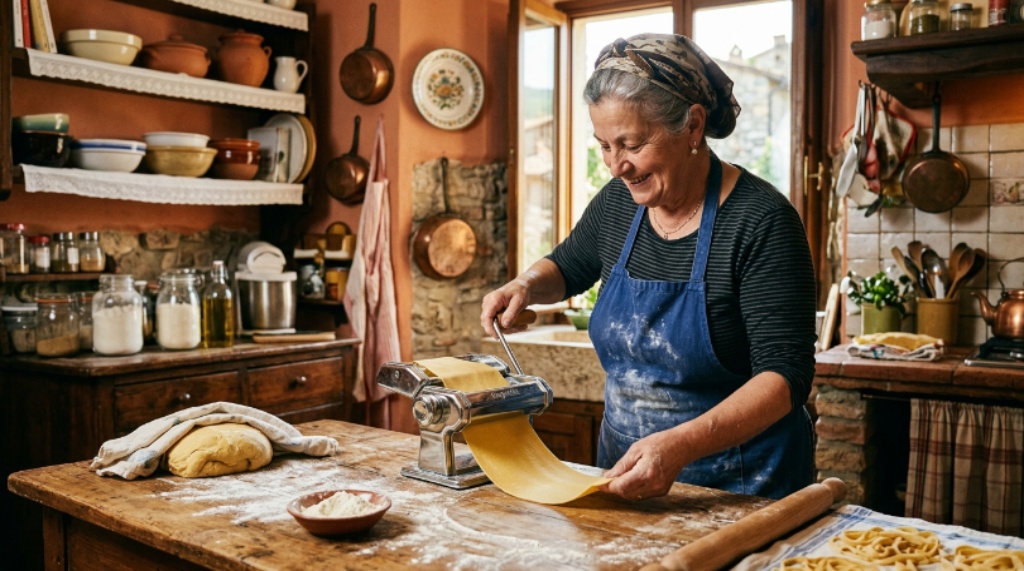
For many Italian families, learning to make pasta is a rite of passage. Grandmothers teach granddaughters. Fathers show sons. The hands that roll the dough become part of the memory. A manual pasta roller sits on the kitchen counter not just as a tool but as a family heirloom. It is passed down like a recipe or a family name.
This cultural weight is hard to replace with an electric motor.
Control Is the Key Advantage
One of the strongest reasons Italian home cooks prefer manual tools is control. When you turn the handle of a classic pasta roller, you feel the dough. You can sense when it is too thick or too thin. You adjust without thinking. This level of feedback simply does not exist with an electric machine.
Additionally, manual rolling allows cooks to work at their own pace. Dough needs time and care. Rushing it leads to tears and uneven texture. With a hand-operated machine, the cook sets the rhythm. There is no button to press and no timer to watch.
Experienced cooks also value the ability to change technique mid-roll. If the dough needs a stretch in one direction, they can do that. If a corner is thicker, they give it extra attention. This kind of fine-tuning produces pasta that is consistent in the best possible way — consistently handmade.
The Texture Difference Is Real
Ask any Italian cook why they avoid electric pasta machines, and texture will come up quickly. Manual rolling compresses and stretches the dough in a way that creates a slightly rough surface. That roughness is not a flaw. It is a feature.
Rough pasta holds sauce better. When a strand of spaghetti has tiny ridges and imperfections, the sauce clings to it. Every bite delivers more flavor. Smooth, machine-made pasta tends to let sauce slide off. The eating experience is noticeably different.
Furthermore, manual tools give the dough a denser, chewier bite. Many Italian home cooks describe this as the pasta having more “body.” It fills the mouth in a satisfying way. Electric machines can produce pasta quickly, but they often sacrifice this quality in the name of speed.
Simplicity and Reliability
Manual pasta tools are simple devices. They have few moving parts. They do not need electricity and they do not break down mid-use. This reliability matters in a practical kitchen where cooking is a daily act, not a weekend project.
Authentic pasta tools built from stainless steel and cast iron can last for decades. Many Italian families own machines that are twenty, thirty, or even fifty years old. They still work perfectly. The same cannot always be said for electric alternatives, which may wear out, need replacement parts, or simply stop working after a few years.
Cleaning is also straightforward. A quick wipe with a dry cloth is usually all that is needed. There are no electrical components to worry about, no parts to disassemble carefully, and no risk of water damage.
The Meditative Quality of the Process
There is a slower, quieter pleasure in manual pasta making that Italian cooks often describe with great fondness. The repetitive motion of rolling dough is meditative. It slows the mind down. It connects the cook to the present moment in a way that pressing a button never could.
Many cooks say that the time spent making pasta manually is not wasted time. It is thinking time, talking time, or simply quiet time. Children sit at the table and watch. Conversations happen. The kitchen fills with warmth before the pasta even touches the water.
However, this is not just sentimentality. Mindful cooking tends to produce better food. When a cook is fully present and engaged, they notice details. They catch problems early. They adjust instinctively. The pasta benefits from that attention.
A Classic Pasta Roller Remains the Gold Standard
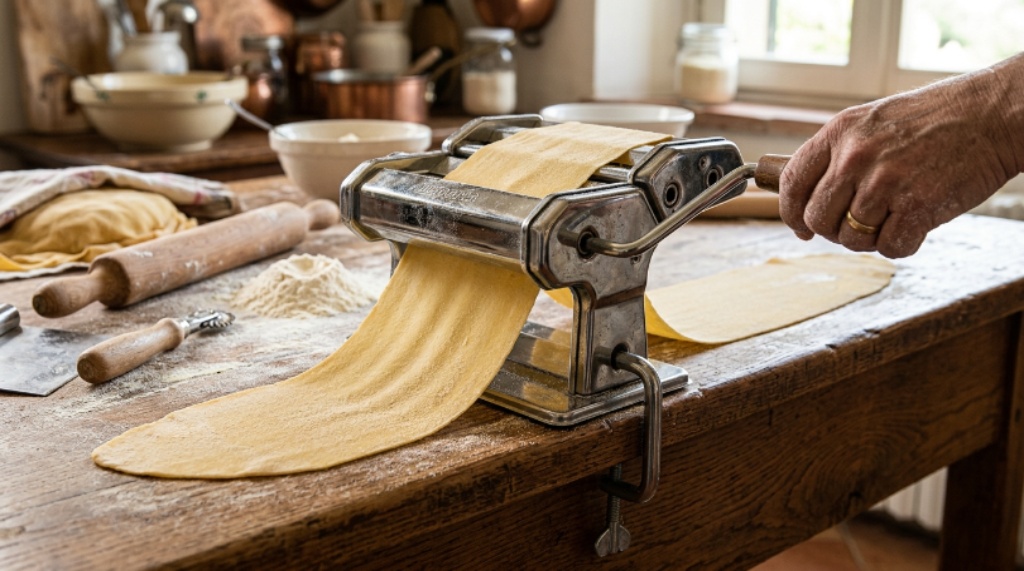
Among the many tools available, the classic pasta roller remains the most trusted choice for Italian home cooks. It is the benchmark against which other methods are judged. The simple design — two rollers, an adjustable thickness dial, and a side attachment for cutting — has not changed much because it does not need to.
These machines are compact and easy to store. They clamp to a countertop or table and are ready to use in seconds. Unlike large appliances, they do not dominate the kitchen. They sit quietly until they are needed, then do their job without fuss.
For cooks who want authentic pasta tools that will serve them for a lifetime, a quality manual roller is the most sensible investment. It is affordable, durable, and deeply connected to the Italian tradition of making food with care and attention.
Sustainability and Mindful Consumption
There is also a modern reason to appreciate manual pasta tools: they align with a more sustainable lifestyle. They use no electricity, produce no emissions, and last for generations. In a world increasingly concerned with overconsumption and waste, a tool that works without power and lasts for decades is a quiet act of environmental responsibility.
Additionally, making pasta at home from simple ingredients — flour, eggs, water — reduces dependence on packaged products. There is no plastic wrapper, no preservatives, and no shipping footprint. Italian home cooks have always known this. It is not a trend for them. It is simply the way things have always been done.
Conclusion
Italian home cooks prefer manual pasta makers for many reasons. Control, texture, tradition, reliability, and the meditative joy of the process all play a role. A classic pasta roller connects the cook to a long lineage of makers who believed that good food takes time and care.
These authentic pasta tools are not relics of the past. They are practical, sustainable, and deeply meaningful. They produce pasta that tastes better, holds sauce more effectively, and carries the spirit of the person who made it. In a fast-moving world, that is something worth holding on to.
Frequently Asked Questions
Why do Italian cooks prefer manual pasta machines over electric ones?
Italian cooks prefer manual machines because they offer more control over the dough, produce a better texture, and connect the cook to a long culinary tradition. The hands-on process also allows for real-time adjustments that electric machines cannot provide.
How long does a manual pasta roller typically last?
A well-made manual pasta roller can last for several decades. Many Italian families own machines that are 30 to 50 years old and still in regular use. With minimal maintenance, these tools are built to outlast most modern kitchen appliances.
Is homemade pasta from a manual machine really better than store-bought?
Yes, in most cases. Homemade pasta made with a manual roller has a slightly rough texture that holds sauce better and a denser chew that many people find more satisfying. It also contains no preservatives and can be made fresh on demand.
What is the best flour to use with a manual pasta roller?
Most Italian home cooks use “00” flour (doppio zero) for smooth, silky pasta or semolina flour for a firmer, more traditional texture. The choice depends on the pasta type and personal preference.
Can beginners use a manual pasta maker easily?
Yes. Manual pasta machines are designed to be simple and intuitive. Beginners may need a few practice sessions to get the feel of the dough and the rolling technique, but most people find the learning curve manageable within just a few tries.