
The best way to choose an automatic pool vacuum cleaner on a budget is to match the cleaner type (suction, pressure, or robotic) to your pool size, debris type, and filtration system while prioritizing essential features over premium extras.
Most pool owners don’t realize how much time and money they waste on the wrong cleaner until it’s too late. You buy something cheap, it misses debris, clogs constantly, or breaks in a few months. Now you’re spending more than if you had chosen smartly in the first place.
An automatic pool vacuum cleaner is designed to remove dirt, leaves, algae, and debris from your pool without manual effort. But not all models are equal—especially in the budget category. The challenge is finding a cleaner that actually works without overspending.
Here’s the reality: a well-chosen budget vacuum can clean just as effectively as expensive models if you understand what matters—and what doesn’t. This guide breaks down exactly how to choose the right one without wasting money.
What types of automatic pool vacuum cleaners are available?
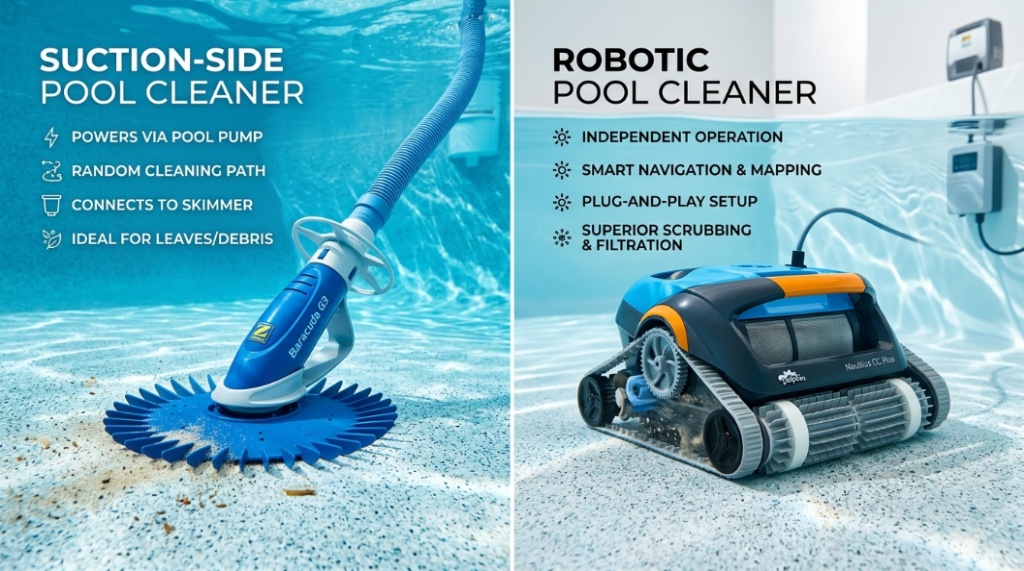
There are three main types: suction-side, pressure-side, and robotic cleaners—each with different costs, performance levels, and maintenance requirements.
1. Suction-Side Pool Cleaners
These connect to your pool’s filtration system and use suction power to move and collect debris.
- Most affordable option
- Easy to install
- Best for small to medium pools
- May clog with large debris
2. Pressure-Side Pool Cleaners
These use water pressure from a return jet to move and collect debris into a separate bag.
- Handles larger debris better
- Reduces strain on pool filter
- Requires booster pump (extra cost)
3. Robotic Pool Cleaners
These are independent units with their own motor and filtration system.
- Most efficient cleaning
- Energy-efficient long-term
- Higher upfront cost
- Best for deep cleaning and automation
Which type is best for a budget buyer?
Suction-side cleaners are usually the best choice for budget buyers because they offer reliable cleaning at the lowest upfront cost.
If your pool mainly collects dirt, sand, and small debris, suction models are more than enough. However, if your pool has lots of leaves, stepping up to a pressure-side cleaner may save you frustration.
How much should you spend on a budget pool vacuum?
A reasonable budget range for an automatic pool vacuum cleaner is $100–$300, depending on features and type.
| Budget Range | What You Get | Best For |
|---|---|---|
| $100–$150 | Basic suction cleaners | Small pools, light debris |
| $150–$250 | Better suction or entry pressure models | Medium pools, mixed debris |
| $250–$300 | Entry-level robotic cleaners | Hands-free cleaning |
Spending slightly more upfront often reduces long-term maintenance costs and replacements.
What features actually matter in a budget cleaner?
The most important features are suction power, coverage pattern, filtration ability, and durability—not smart controls or premium add-ons.
Essential Features
- Strong suction or cleaning power
- Wide cleaning path
- Simple hose or setup system
- Durable materials
- Clog-resistant design
Features You Can Skip
- Wi-Fi or app control
- Advanced navigation AI
- Fancy LED indicators
- Extra attachments you won’t use
Focus on performance, not gimmicks.
How do you match a cleaner to your pool type?
You should choose a cleaner based on your pool size, shape, surface type, and debris load.
Pool Size
- Small pools: basic suction cleaners work fine
- Large pools: consider pressure or robotic models
Pool Surface
- Vinyl: gentle brushes required
- Concrete: stronger scrubbing needed
- Fiberglass: balanced cleaning system
Debris Type
- Fine dirt: suction cleaner is enough
- Leaves/twigs: pressure cleaner is better
- Mixed debris: robotic cleaner performs best
Do automatic pool cleaners save money long-term?
Yes, automatic cleaners reduce labor, chemical usage, and filtration strain, which lowers long-term pool maintenance costs.
According to industry estimates, automated cleaning can reduce chemical usage by up to 30% because consistent debris removal prevents water imbalance.
Cleaner pools also extend the lifespan of filters and pumps.
Are cheap pool vacuums worth it?
Cheap pool vacuums can be worth it if they match your pool needs, but the cheapest option is rarely the best value.
Common problems with ultra-cheap models:
- Weak suction
- Frequent clogging
- Short lifespan
- Poor coverage
Instead of choosing the cheapest option, look for the best balance of price and reliability.
How easy is installation and maintenance?
Most budget automatic pool vacuum cleaners are designed for quick installation and minimal maintenance.
Installation
- Suction cleaners: connect to skimmer or suction line
- Pressure cleaners: attach to return jet
- Robotic cleaners: plug-and-play
Maintenance
- Empty debris bags regularly
- Check hoses for leaks
- Clean filters weekly
Simple models often require less maintenance than complex ones.
What are the most common mistakes when buying a pool vacuum?
The biggest mistakes are ignoring pool type, buying based on price alone, and overpaying for unnecessary features.
- Choosing wrong cleaner type
- Ignoring debris type
- Buying without checking compatibility
- Focusing only on price, not value
These mistakes often lead to poor cleaning performance and wasted money.
Should you choose robotic cleaners on a budget?
Entry-level robotic cleaners can be a good investment if you want convenience and energy efficiency.
While they cost more upfront, they:
- Use less electricity than pool pumps
- Reduce manual cleaning effort
- Provide better coverage
However, if your budget is tight, suction cleaners remain the most practical option.
What is the best strategy to get maximum value?
The best strategy is to choose a mid-range model with proven reliability instead of the cheapest or most expensive option.
Look for:
- Strong user reviews
- Simple design
- Trusted manufacturer
- Warranty support
Reliability matters more than extra features.
Conclusion
Choosing the right automatic pool vacuum cleaner on a budget is not about finding the cheapest option—it’s about making a smart, informed decision.
Focus on what actually affects cleaning performance: the type of cleaner, your pool size, and the kind of debris you deal with. Suction cleaners work well for most budget users, while pressure and robotic models offer better performance for specific needs.
If you avoid common mistakes and prioritize value over price, you can get a cleaner that keeps your pool spotless without draining your wallet.
Take a few extra minutes to evaluate your pool setup before buying—it can save you years of frustration and unnecessary costs.
FAQ Section
What is the cheapest effective automatic pool vacuum cleaner?
The cheapest effective option is usually a suction-side cleaner in the $100–$150 range that matches your pool size and debris type.
Can a budget pool vacuum clean algae?
Yes, but only light algae. For heavy algae, you’ll still need manual brushing and chemical treatment.
How long do budget pool cleaners last?
Most budget cleaners last 2–5 years depending on usage, maintenance, and build quality.
Do robotic pool cleaners use a lot of electricity?
No, robotic cleaners are energy-efficient and typically use less power than traditional pool pumps.
Can I leave my automatic pool vacuum in the pool?
Some models can stay in the pool, but it’s better to remove them after use to extend lifespan.
Are automatic pool cleaners better than manual ones?
Yes, they save time and provide more consistent cleaning, especially for larger pools.
How often should I run my pool vacuum?
Running your cleaner 2–3 times per week is usually enough for regular maintenance.
📌 Related Reads
👉 Explore what should business owners ask a commercial roofing contractor in madison al first
👉 Learn how to chronic fatigue syndrome and what can be helpful for those who suffer from it?

