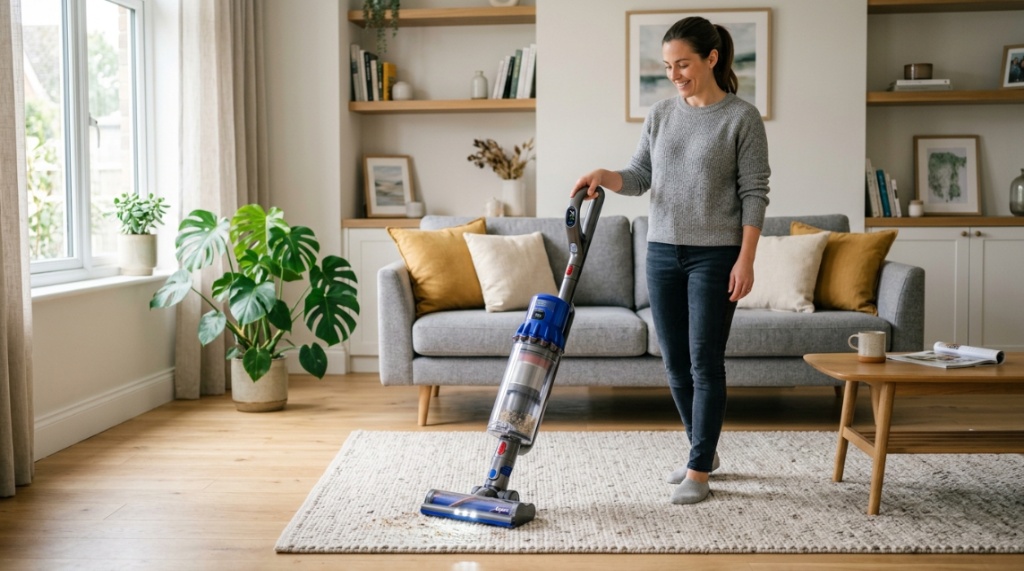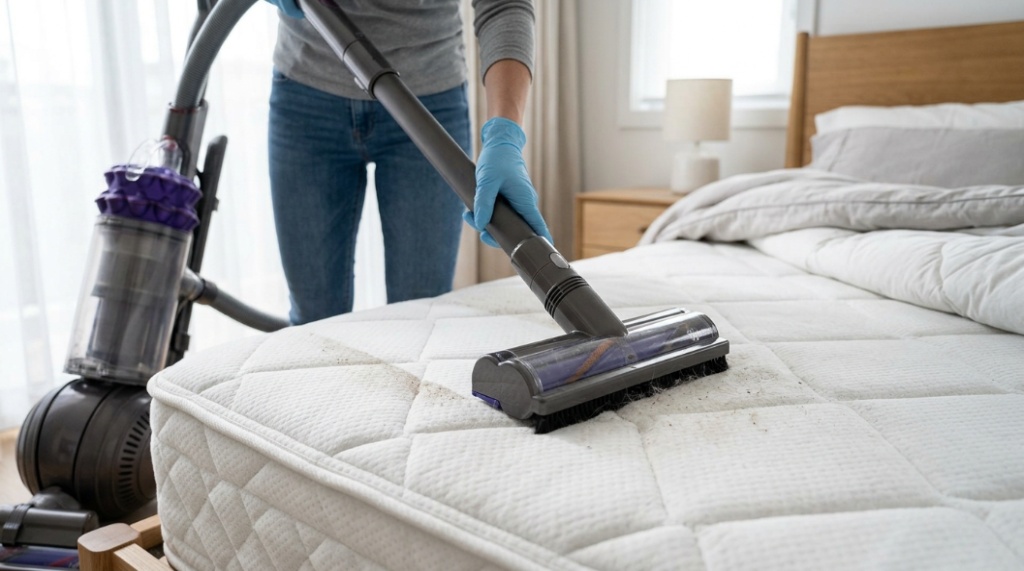
The most effective way to remove dust mites from a mattress is to vacuum it slowly using a high-suction vacuum cleaner with a HEPA filter and upholstery attachment, focusing on seams, edges, and both mattress sides at least once per week. This physically removes mites, shed skin cells, and allergen particles that trigger allergies and poor sleep.
Why Are Dust Mites in Your Mattress a Hidden Health Problem?
Dust mites live deep inside mattresses, feeding on dead skin cells and releasing allergen particles that can trigger sneezing, asthma, itching, and restless sleep. Even clean-looking beds may contain millions of microscopic mites. According to the American Lung Association, dust mite allergens are among the most common indoor allergy triggers worldwide.
Understanding how to remove dust mites from mattress surfaces properly is essential if you want better sleep quality and improved indoor air hygiene. A powerful vacuum cleaner with the right technique can significantly reduce allergen exposure without expensive treatments.
This guide explains how vacuuming works, how often to do it, what tools to use, and how to prevent mites from returning.
How Does Vacuuming Remove Dust Mites from a Mattress?
A powerful vacuum removes dust mites by extracting skin flakes, mite waste particles, and allergen debris embedded in mattress fibers using strong suction and filtration.
Dust mites themselves are microscopic arthropods that thrive in warm, humid bedding environments. While vacuuming alone does not eliminate every mite, it dramatically lowers allergen concentration and improves respiratory comfort.
Effective vacuuming removes:
- Dust mite bodies
- Fecal particles (primary allergen source)
- Dead skin cells
- Pet dander
- Dust buildup
Research from indoor environmental health studies shows consistent HEPA vacuuming can reduce mattress allergen levels by up to 60% when performed weekly.
What Type of Vacuum Works Best for Removing Dust Mites?
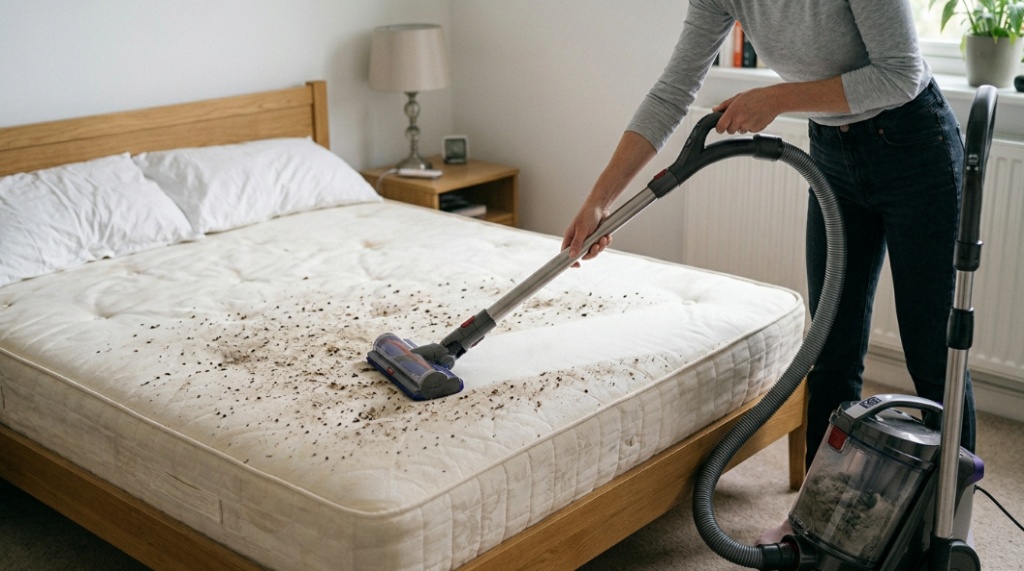
A vacuum cleaner with strong suction, a HEPA filter, and an upholstery attachment works best for removing dust mites from mattresses.
Standard vacuums without sealed filtration systems often release allergen particles back into the air. A sealed HEPA system traps microscopic particles as small as 0.3 microns.
Recommended Features to Look For
- HEPA filtration system
- Motorized upholstery brush
- Strong suction power
- Anti-allergen sealed body
- Lightweight handheld option for precision cleaning
| Vacuum Feature | Why It Matters |
|---|---|
| HEPA Filter | Captures microscopic allergen particles |
| Motorized Brush | Dislodges embedded mites |
| High Suction Power | Pulls debris from deep mattress layers |
| Sealed System | Prevents allergen recirculation |
How Often Should You Vacuum Your Mattress to Remove Dust Mites?
You should vacuum your mattress once per week if you have allergies and at least once every two weeks for general hygiene maintenance.
Bedrooms accumulate dead skin quickly. An average person sheds about 1.5 grams of skin daily, enough to feed thousands of mites.
Increase vacuuming frequency if:
- You have asthma or allergies
- You own pets
- You live in humid climates
- Your bedding is rarely washed in hot water
Weekly vacuuming combined with hot-water sheet washing produces the best allergen reduction results.
What Is the Correct Step-by-Step Method to Vacuum a Mattress?
The correct method is to vacuum slowly across the entire mattress surface using overlapping strokes and focusing on seams, edges, and hidden folds.
Step-by-Step Mattress Vacuuming Process
- Remove all bedding and pillows
- Attach upholstery brush to vacuum
- Start from the top edge
- Move slowly in straight overlapping lines
- Clean seams and stitched areas carefully
- Flip mattress and repeat on the other side
- Vacuum bed frame and surrounding floor
Slow movement increases extraction efficiency. Fast sweeping passes remove less embedded debris.
Can Vacuuming Alone Kill Dust Mites Permanently?
No, vacuuming alone cannot permanently kill dust mites, but it significantly reduces their population and allergen levels.
Dust mites reproduce quickly in humid environments. Effective control requires combining vacuuming with humidity management and protective bedding.
Combine vacuuming with:
- Mattress encasements
- Hot-water washing
- Humidity control below 50%
- Sunlight exposure when possible
Does Using a HEPA Filter Vacuum Improve Allergy Symptoms?
Yes, using a HEPA filter vacuum reduces airborne allergen exposure and can noticeably improve allergy symptoms.
Clinical indoor-air studies confirm HEPA filtration significantly lowers dust mite allergen concentration compared to standard filtration systems.
Common improvements include:
- Reduced sneezing
- Less nasal congestion
- Fewer asthma flare-ups
- Improved sleep quality
Which Mattress Areas Contain the Most Dust Mites?
The highest dust mite concentration is typically found along seams, edges, pillow zones, and the upper third of the mattress.
These areas trap skin cells and moisture more efficiently than flat surfaces.
Focus extra vacuum time on:
- Corner seams
- Pillow contact zones
- Stitched borders
- Under mattress handles
Should You Vacuum Both Sides of the Mattress?
Yes, vacuuming both sides of the mattress removes hidden allergens that accumulate underneath and prevents mite migration.
Even non-flippable mattresses benefit from underside cleaning because dust settles through gravity and airflow.
Rotate mattresses every three months for best hygiene results.
Is Steam Cleaning Better Than Vacuuming for Dust Mites?
Steam cleaning kills dust mites with heat, while vacuuming removes allergens physically, making the combination more effective than either method alone.
| Method | Primary Benefit | Limitation |
|---|---|---|
| Vacuuming | Removes allergens | Does not kill all mites |
| Steam Cleaning | Kills mites instantly | Requires drying time |
| Encasement Covers | Blocks mite colonization | Needs regular washing |
Steam above 130°F (54°C) effectively destroys mites but must be used carefully to avoid moisture buildup.
What Additional Steps Help Prevent Dust Mites After Vacuuming?
Reducing humidity, washing bedding weekly in hot water, and using allergen-proof covers help prevent dust mites from returning.
Long-Term Dust Mite Prevention Checklist
- Wash sheets weekly at 60°C (140°F)
- Use zippered mattress encasements
- Reduce indoor humidity
- Avoid heavy carpets in bedrooms
- Vacuum upholstered furniture regularly
These steps interrupt the mite lifecycle and reduce long-term allergen buildup.
Can Sunlight Help Remove Dust Mites from a Mattress?
Yes, direct sunlight helps reduce dust mites by lowering moisture levels and exposing them to ultraviolet radiation.
Place mattresses in sunlight for 2–3 hours when possible. This naturally decreases mite survival rates.
Sunlight also improves odor control and freshness.
Do Mattress Protectors Stop Dust Mites Completely?
Mattress encasements do not eliminate dust mites entirely but prevent them from entering or escaping mattress fibers.
High-quality encasements create a physical barrier that blocks allergen movement.
Choose protectors labeled:
- Allergen-proof
- Microporous fabric
- Breathable barrier material
Is Vacuuming a Mattress Safe for Memory Foam and Hybrid Mattresses?
Yes, vacuuming is safe for memory foam and hybrid mattresses when using a soft upholstery attachment.
Avoid rotating brush heads on delicate foam surfaces because they may damage structure integrity.
Instead, use gentle suction passes.
Conclusion: What Is the Most Effective Routine for Keeping Your Mattress Dust-Mite Free?
The most effective routine combines weekly HEPA vacuuming, hot-water sheet washing, humidity control, and allergen-proof mattress covers to reduce dust mites and improve sleep hygiene.
Vacuuming remains the fastest and most accessible method for lowering allergen exposure immediately. When paired with preventative strategies, it creates a healthier bedroom environment and supports better respiratory comfort.
Start with a weekly mattress vacuum routine today. Small consistency changes produce long-term allergy relief and cleaner indoor air.
FAQ: How to Remove Dust Mites from Mattress
Can dust mites live inside memory foam mattresses?
Yes, dust mites can live inside memory foam mattresses because they feed on skin flakes trapped within the foam structure.
Does baking soda help remove dust mites before vacuuming?
Yes, sprinkling baking soda before vacuuming helps loosen debris and absorb moisture, improving dust mite removal efficiency.
How long should you vacuum a mattress to remove dust mites?
Vacuum a mattress for at least 10–15 minutes using slow overlapping strokes to maximize allergen extraction.
Can freezing a mattress kill dust mites?
Freezing can kill dust mites temporarily, but it is impractical for full-size mattresses and does not remove allergen particles.
Do air purifiers reduce dust mites in mattresses?
Air purifiers reduce airborne allergens but cannot remove mites embedded inside mattress fibers.
What humidity level prevents dust mite growth?
Keeping indoor humidity below 50% significantly limits dust mite survival and reproduction.
Is replacing a mattress necessary to eliminate dust mites?
Replacing a mattress may help in severe allergy cases, but regular vacuuming and encasements usually provide effective control.
Read More Also: How to Pick a Cordless Vacuum for Cat Hair in Small Homes
Discover More: What Should Business Owners Ask a Commercial Roofing Contractor in Madison AL First