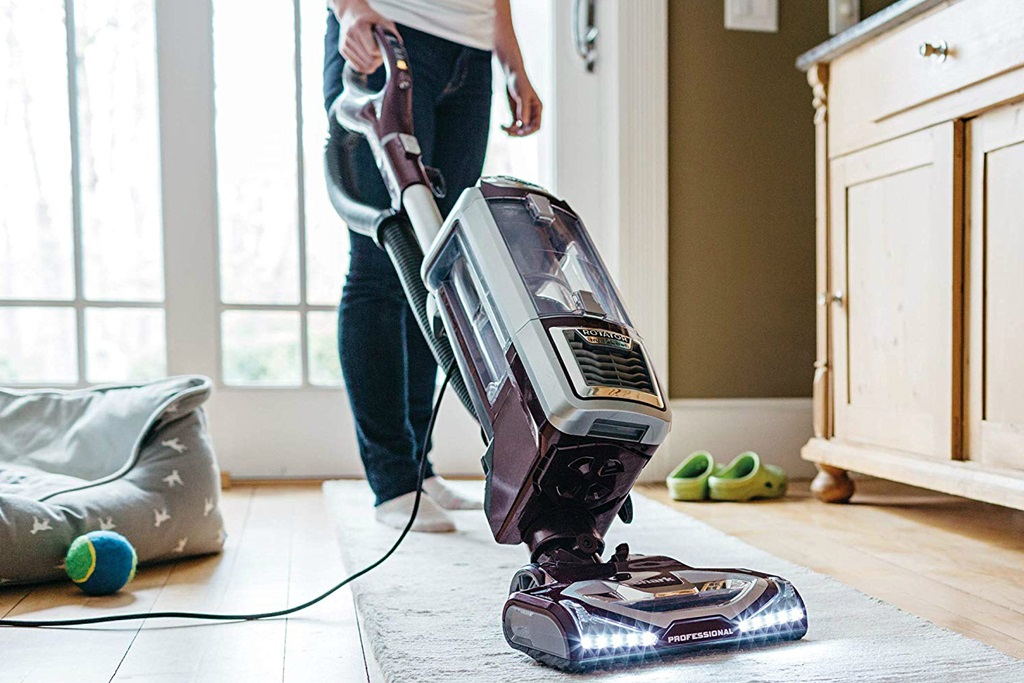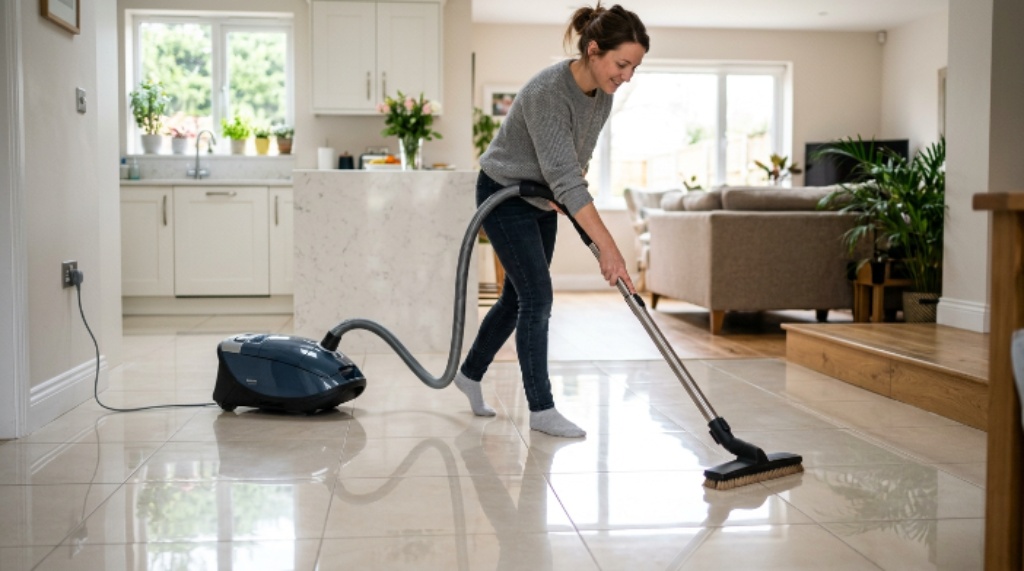
Tile floors look stunning when they are clean. However, keeping them that way takes more thought than most people realize. Many homeowners accidentally scratch their tiles or damage grout by using the wrong cleaning tools. The good news is that with the right vacuum, you can keep your tile floors spotless without causing any harm.
This guide walks you through everything you need to know. You will learn what causes scratches, what features to look for, and how to use your vacuum safely on tile and grout.
Why Tile Floors Are More Delicate Than They Look
Tile may seem tough, but it has a few weak spots. The surface glaze on ceramic and porcelain tiles can scratch when it comes into contact with hard plastic or rough bristles. Additionally, the grout lines between tiles are porous and fragile. Harsh suction or stiff brush rollers can erode grout over time.
Natural stone tiles, such as marble and travertine, are even more sensitive. A single pass with the wrong vacuum attachment can leave visible marks. Therefore, understanding your tile type is the very first step.
There are three common tile surfaces in most homes:
- Ceramic and porcelain — durable but susceptible to surface scratches from hard debris
- Natural stone — soft and porous, requires the gentlest touch
- Luxury vinyl tile — looks like tile but scratches easily from rough vacuums
Each surface calls for a slightly different approach, but the core rules stay the same.
What Causes Scratches During Vacuuming
Before choosing a vacuum, it helps to know what creates the damage in the first place. Most scratches on tile floors come from just a few sources.
Hard wheels are a common culprit. Many upright vacuums have plastic wheels with ridged edges. When you push them across tile, they can leave fine scratches, especially on polished surfaces. Stiff rotating brush rolls are another problem. These are designed to agitate carpet fibers, but on hard floors, they spin at high speed and fling debris into the tile at force.
Additionally, metal or rigid plastic parts on vacuum heads can drag across the surface if the head sits too low. Over time, this causes micro-scratches that dull the tile’s finish. Therefore, the right vacuum must address all of these points.
Key Features to Look for in a Safe Tile Vacuum
Choosing the best vacuum for tile floors comes down to a short list of must-have features. Each one directly reduces the risk of scratching or grout damage.
Soft Rubber Wheels
Look for vacuums with soft, rubberized wheels. These glide smoothly across tile without leaving marks. They also grip the floor better, which makes the vacuum easier to push.
A Brush Roll On/Off Switch
A rotating brush roll is useful on carpet but harmful on tile. The best models give you the option to turn the brush roll off completely. When the bristles stop spinning, the vacuum head rests softly on the tile and simply suctions up debris without abrasion.
Hard Floor Settings and Adjustable Height
Some vacuums come with a dedicated hard floor mode. This lowers the suction or raises the vacuum head slightly so it does not press hard against the tile. Either way, the goal is to reduce friction between the machine and your floor.
Soft Felt or Microfiber Floor Pads
Certain canister and stick vacuums come with soft felt pads instead of brush rolls. These are ideal for tile because they are gentle by design. They pick up fine dust and hair without making contact with rough bristles at all.
Grout-Safe Suction Levels
Strong suction is not always better. Extremely high suction can pull at grout particles, especially in older floors where the grout is already cracked or crumbling. A grout safe vacuum will either have adjustable suction or a setting designed for hard floors that keeps power steady without being excessive.
The Best Vacuum Types for Tile Floors
Not every vacuum style works equally well on tile. Here is a breakdown of which types perform best and why.
Canister Vacuums
Canister vacuums are widely considered the top choice for tile floors. The main body rolls on wheels behind you, and you control a lightweight wand over the floor. This setup gives you excellent maneuverability around furniture and into corners. Most canister models come with a dedicated hard floor brush attachment that has soft natural bristles. These bristles sweep up debris gently without any spinning action.
Stick Vacuums
Stick vacuums are lightweight and easy to use for daily cleaning. The best models for tile include a soft roller head instead of a traditional brush roll. This roller picks up both fine dust and larger debris in one pass. However, be sure to check that the model you choose has a hard floor mode or a way to disable the motorized brush.
Robotic Vacuums
Robot vacuums have become a popular choice for tile maintenance. They run on soft rubber treads rather than hard plastic wheels, and most modern models automatically detect hard floors and adjust their cleaning head accordingly. They are excellent for daily upkeep because they can clean on a schedule. However, they may miss corners or grout lines that need more focused attention.
Handheld Vacuums
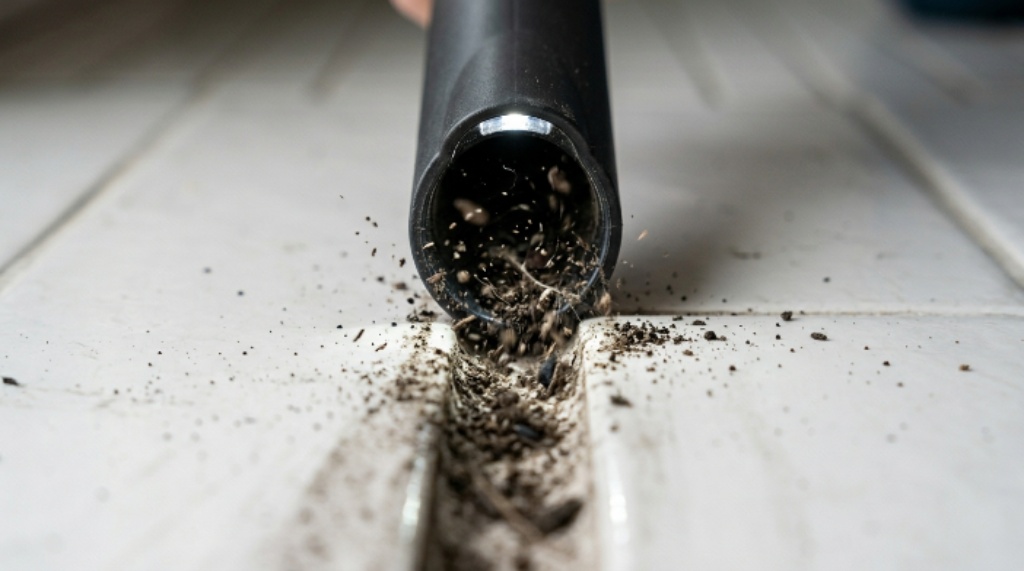
For grout lines and tight spots, a handheld vacuum with a crevice tool works very well. You can run the nozzle directly along grout lines to pull out trapped dirt without using a brush at all. This is especially useful after mopping, when loose debris tends to settle back into the grout.
How to Vacuum Tile Floors Without Causing Damage
Having the right vacuum is only half the job. How you use it matters just as much. Follow these steps each time you clean for the best results.
Start by removing any large debris by hand. Pieces of gravel, small toys, or food scraps can get caught under the vacuum head and dragged across the tile surface. Picking these up first prevents unnecessary contact between hard objects and the floor.
Next, choose the correct attachment. For open floor areas, use a hard floor brush with soft bristles or a felt pad. For grout lines and edges, switch to a crevice tool. Never use the carpet attachment on tile floors.
Move the vacuum slowly and steadily. Fast passes miss fine dust and also increase the chance of the vacuum head skipping and scraping across the surface. Slow, deliberate strokes give the suction time to lift debris fully.
Additionally, vacuum before you mop. Wet debris clings to tile and grout much more stubbornly than dry debris. Removing loose dust and dirt before introducing water makes the entire cleaning process more effective.
Finally, clean your vacuum’s wheels and brush heads regularly. Dirt and small stones can lodge in the wheels and scratch the tile on the next use. A quick wipe-down after each session keeps everything in good shape.
Maintaining Your Grout Between Vacuuming Sessions
Even with the best vacuum for tile floors, grout requires some extra care. Grout is porous, which means it traps bacteria, mold spores, and staining agents over time.
Seal your grout every one to two years. A good grout sealer fills in the pores and makes the surface much easier to clean. It also reduces how much the vacuum needs to work because less debris gets trapped inside the grout in the first place.
Spot clean grout stains as soon as they happen. A simple paste of baking soda and water applied with a soft toothbrush is gentle enough to clean without damaging grout structure. Avoid harsh chemical cleaners that dissolve grout over time.
Conclusion
Cleaning tile floors without scratching them is entirely possible when you use the right equipment and the right technique. The key points to remember are simple. Choose a vacuum with soft wheels, an adjustable brush roll, and a hard floor setting. Use the correct attachment for the surface you are cleaning. Move slowly and clean your equipment regularly. Additionally, support your vacuuming routine with proper grout maintenance to keep floors looking their best year after year.
With these steps in place, your tile floors will stay clean, scratch-free, and beautiful for a long time to come.
Frequently Asked Questions
Can I use a regular upright vacuum on tile floors?
You can, but it depends on the model. Many upright vacuums have hard plastic wheels and spinning brush rolls that can scratch tile. Look for one with a hard floor mode or a brush roll off switch before using it on tile.
What is the safest vacuum attachment for grout lines?
A crevice tool or a soft-bristle brush attachment works best on grout. These allow you to clean along grout lines without pressing hard against the tile surface or using rotating bristles that could erode grout edges.
How often should I vacuum tile floors?
For most homes, vacuuming tile floors two to three times per week is enough. However, high-traffic areas like kitchens and entryways may need daily attention to prevent grit from building up and causing scratches underfoot.
Are robotic vacuums safe for tile floors?
Yes, most modern robotic vacuums are safe for tile. They typically run on soft rubber treads and automatically adjust their cleaning head for hard floors. However, check that the model you choose does not have exposed metal parts on the underside.
Will a high-suction vacuum damage grout?
Extremely high suction can pull loose or crumbling grout particles out of the joints, especially in older floors. Look for a grout safe vacuum with adjustable suction so you can lower the power when cleaning near delicate grout lines.
Related Topics:
Why Is My Shark Vacuum Not Working? Expert Tips to Diagnose and Fix Issues
How to Pick a Cordless Vacuum for Cat Hair in Small Homes