
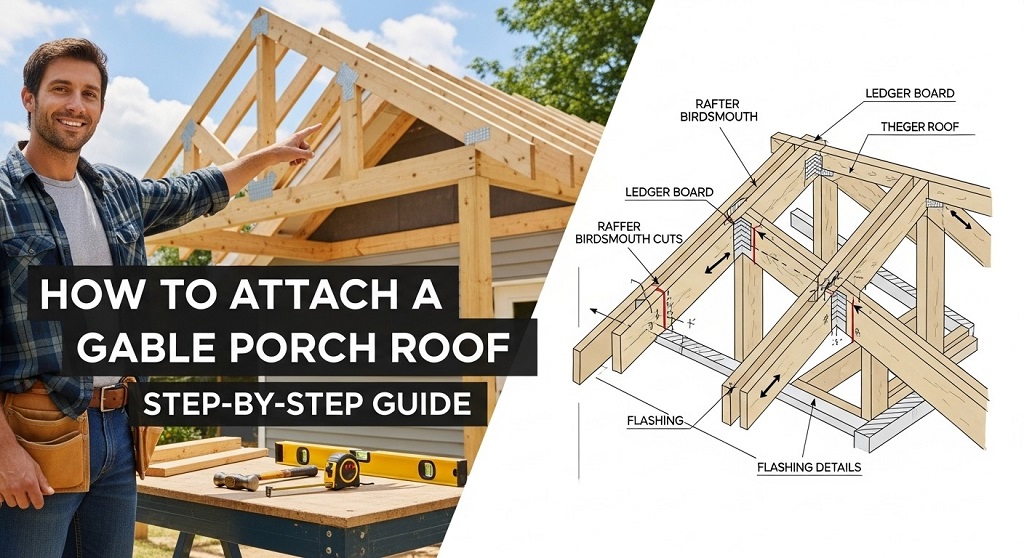
Adding a gable porch roof instantly boosts curb appeal and gives you a beautiful shaded outdoor space. In fact, the National Association of Home Builders reports that a well-designed front porch can increase perceived home value by up to 12%. Moreover, the U.S. Census Bureau shows over 600,000 porch additions happen annually in America alone. Yet many homeowners hesitate because they think tying a new gable roof into an existing house is complicated. The good news? You can do it safely and correctly with the right plan. This guide walks you through every detail—from planning and ledger installation to final flashing—so your new porch roof looks like it was always part of the house.
Why Choose a Gable Porch Roof Over Other Styles?
Homeowners love gable designs for good reasons. First, the classic triangular shape sheds water and snow quickly. Second, the open gable ends allow excellent ventilation. Finally, the style matches most colonial, craftsman, and traditional homes perfectly.
You gain usable attic space under the porch roof too. Many families later screen it in or add ceiling fans. Additionally, gable roofs handle high winds better than hip roofs in most cases, according to engineering studies from Texas Tech University’s Wind Science Center.
Planning and Preparation Before You Start
Success begins long before the first nail. Start with local building codes. Most towns require permits for any structural roof addition. Next, order a set of stamped drawings from a structural engineer if your new porch exceeds 10×12 feet.
Measure twice, order once. Calculate exact rafter lengths using a construction calculator or the free online tool from the American Wood Council. Always add 12–18 inches of overhang on each gable end for proper water drainage.
Gather your tools early:
- Circular saw and reciprocating saw
- Framing nailer and roofing nailer
- 4-foot level and laser level
- Chalk line, tape measure, and speed square
- Safety gear (hard hat, harness if working high)
Choosing the Right Pitch for Your New Gable Roof
Match your existing house roof pitch whenever possible. Common pitches range from 4/12 to 9/12. A 6/12 pitch works best for most porches because it sheds water well yet keeps headroom comfortable.
Use the pitch to determine birdsmouth cuts on rafters. For example, a 6/12 roof needs a 26.57-degree angle cut. Modern apps like “Roof Pitch Calculator” give you exact angles in seconds.

Installing the Ledger Board – The Most Critical Step
The ledger board carries half the roof load, so never skip proper attachment.
- Locate the rim joist or band board behind your siding.
- Remove siding in a strip 2 inches taller than your ledger (usually 2×10 or 2×12).
- Flash the wall with peel-and-stick membrane and metal Z-flashing on top.
- Use ½-inch galvanized lag screws every 16 inches, staggered high and low.
- Each lag must penetrate solid framing by at least 3 inches—never just sheathing.
Many failed porches collapse because builders used nails or short screws. Spend the extra time here.
Building the Gable End Frames First
Experienced carpenters build gable end walls on the ground, then tilt them up. This method stays perfectly plumb and square.
Cut two king posts and four common rafters for each end wall. Nail doubled top plates and a bottom plate. Add temporary diagonal braces. Finally, stand the walls, level them, and toenail into the porch floor or beam.
Cutting and Installing Common Rafters
Lay out rafter positions on the ledger and top plate exactly 24 inches on center (or 16 inches in snow country). Use the same birdsmouth depth throughout.
Cut a pattern rafter first. Test-fit it, then use it as a template for the rest. Install hurricane ties or rafter clips at every connection—modern codes often require them.
Sheathing, Underlayment, and Shingle Installation
Cover rafters with ⅝-inch OSB or plywood. Start at the bottom and stagger seams. Nail every 6 inches on edges and 12 inches in the field.
Roll out synthetic underlayment or ice-and-water shield along eaves and valleys. Install drip edge on rake edges first, then over underlayment on eaves. Match existing shingles as closely as possible. Weave new shingles into old courses where the roof meets the house.
Proper Flashing Where the Roof Meets the House
Bad flashing causes 90% of porch roof leaks. Follow this proven sequence:
- Install step flashing with every shingle course
- Weave L-shaped step flashing under siding one row at a time
- Add continuous counter-flashing bent down over step flashing
- Seal the top edge with high-quality polyurethane caulk
Many pros now use Grace Vycor or similar fully adhered flashing for ultimate protection.
Adding Soffit and Fascia for a Finished Look
Frame soffit with 2×4 lookouts every 24 inches. Ventilate with continuous perforated vinyl or aluminum soffit. Cover fascia with PVC or pre-finished aluminum for zero maintenance.
Paint or stain all exposed wood before installation when possible—this prevents future rot in hard-to-reach areas.
Common Mistakes Homeowners Make (And How to Avoid Them)
- Attaching the ledger to brick veneer instead of solid framing—always find the rim joist.
- Forgetting to flash properly and getting leaks within the first year.
- Building the roof too low and hitting your head on the way out the door.
- Using incorrect hanger hardware that fails inspection.
- Mismatched shingles that scream “add-on” from the street.
Double-check every step against your local code official’s checklist.
Tools and Materials Checklist
Stock up before day one:
- Pressure-treated lumber for posts and beams
- Galvanized or stainless-steel hardware
- Quality asphalt architectural shingles
- Ice-and-water shield and synthetic underlayment
- Metal drip edge and step flashing
- Construction adhesive and exterior caulk
- Rafter ties and post bases
Safety Tips Every DIYer Must Follow
Falls cause most serious injuries on porch projects. Rent scaffolding instead of balancing on ladders. Use fall-arrest harnesses when working above 6 feet. Keep the work area clean—tripping over cut-offs sends many people to the ER.
Work with at least one helper when raising heavy gable walls or long rafters. Stay hydrated and take breaks. Your family wants the porch finished, but they want you in one piece more.
Timeline: How Long Does It Really Take?
A 12×14 gable porch roof typically takes two competent people:
- Day 1–2: Demolition, ledger, posts, and beams
- Day 3: Gable ends and rafters
- Day 4: Sheathing and felt paper
- Day 5: Shingles and flashing
- Day 6: Soffit, fascia, and cleanup
Weather delays can easily add 3–5 days. Start early in the week to avoid weekend rush charges if you hire help.
Final Touches That Make Your Porch Pop
Add cedar or composite decking to the ceiling. Install recessed LED cans or a ceiling fan. Hang gutters with proper slope. Plant climbing roses on lattice end panels. Small details turn a simple roof addition into your favorite room of the house.
Related Topics: Fixing Your Portable Dishwasher
Conclusion
You now have every detail you need to successfully attach a gable porch roof to your house. Start with solid planning, install that ledger correctly, flash like a professional, and your new porch will look factory-built while adding real value to your home.
Ready to transform your front entrance? Grab your tape measure, call your permit office tomorrow, and start sketching your dream porch today. Your future self—sipping coffee under that beautiful new gable roof—will thank you.
Related Topics: Electric kettle to heat water quickly
FAQs
Can I attach a gable porch roof directly to brick veneer?
No. You must locate the wood rim joist behind the brick and attach the ledger to solid framing only. Brick veneer cannot support roof loads.
Do I need an engineer’s stamp for a gable porch roof?
Most towns require stamped drawings for any attached roof over 100–120 square feet or when you remove more than one truss tail. Check locally.
What is the minimum pitch for a shingled gable porch roof?
Manufacturers allow 2/12 with special underlayment, but 4/12 or steeper looks better and lasts longer in most climates.
Should I tie the new rafters into existing roof trusses?
Never cut or modify engineered trusses. Instead, sister new rafters alongside and support them with a properly flashed ledger.
How far can a gable porch roof extend without center posts?
With standard 2×10 rafters at 24″ o.c., you can span about 10–11 feet safely. Beyond that, add beams and posts or upgrade to 2×12s.
References
- American Wood Council – Span Tables: https://www.awc.org
- International Residential Code (2021) – Chapter 8 Roof-Ceiling Construction
- NAHB – Remodeling Market Index Reports
- Texas Tech National Wind Institute – Porch Roof Wind Load Studies


