
Key Takeaways
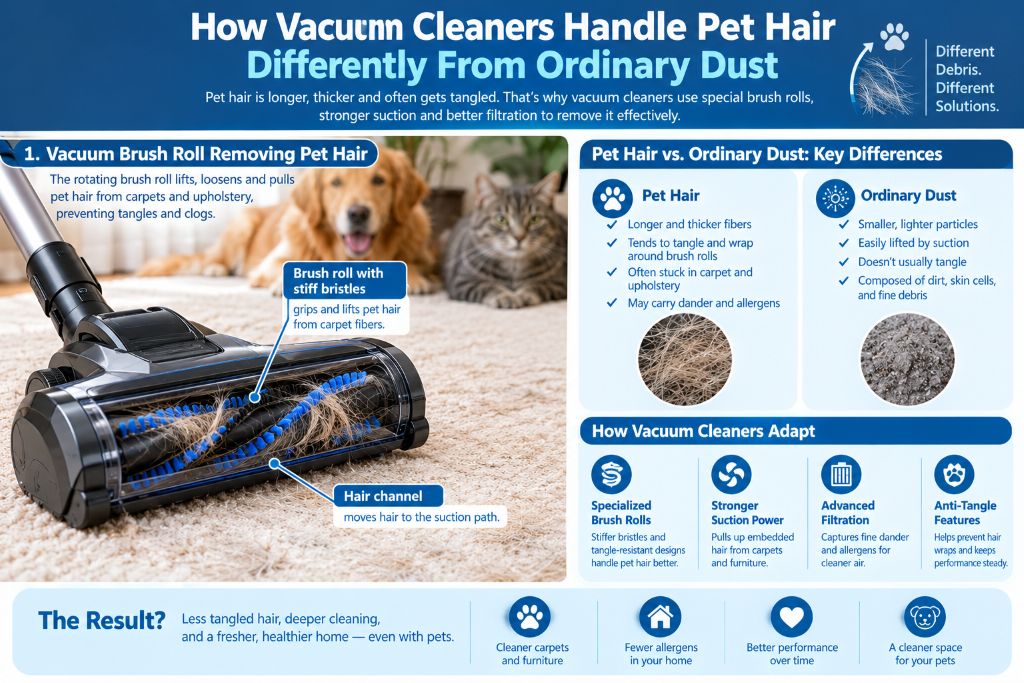
- Pet hair tangles, wraps, and clogs in ways ordinary dust never does.
- Strong suction alone cannot remove hair that is not loosened first.
- Motorized brush rolls with tangle-resistant designs work best for pet hair.
- Pet dander is far finer than dust and demands HEPA filtration.
- Emptying bins and cleaning brushes more often keeps pet vacuums working.
Pet owners know the struggle. Fur collects on carpets, sofas, and car seats faster than any vacuum seems to remove it. Ordinary cleaning routines that work for dust often fail against pet hair. The reason is physical, not a matter of effort. Pet hair behaves completely differently from dust. Dust sits loosely on surfaces and lifts into airflow easily. Meanwhile, hair anchors itself into fabric, wraps around brushes, and clumps inside bins.
This is why pet-specific vacuums exist as a category. They address the three challenges pets create. Hair that tangles in moving parts, dander that floats in the air, and messes that appear daily in small amounts.
This guide explains exactly how pet hair differs from ordinary dust. You will learn why some vacuums fail on fur and which features actually solve the problem. Additionally, you will learn the maintenance habits that keep any pet vacuum performing well.
Why Pet Hair Behaves Differently From Dust
Ordinary dust consists of tiny loose particles. Each particle sits independently, and airflow lifts them one by one. Therefore, a decent suction level collects dust from almost any surface.
Pet hair works against you in several ways. First, hair strands are long and flexible. They weave into carpet fibers and fabric weaves instead of resting on top. Suction alone cannot pull woven strands free. The fibers grip the hair like Velcro.
Second, hair stretches and tangles. Strands wrap around brush rolls, catch on hose ridges, and knot inside dust bins. Consequently, hair does not simply travel through the machine. It catches at every opportunity along the path.
Third, hair carries oils from your pet’s skin. These oils make strands sticky, so fur clumps and sticks to surfaces. According to the American Lung Association, pet allergens also cling to hair and dander particles that stay airborne for long periods.
Here is a quick comparison:
- Dust: loose particles that lift into airflow easily.
- Hair: long strands woven into fibers and fabric.
- Dander: microscopic skin flakes that float for hours.
- Dust mites: tiny creatures feeding on skin flakes.
The volume problem compounds everything. A single cat sheds millions of microscopic skin flakes each day. Meanwhile, fur builds up in corners and under furniture faster than daily dust ever could. Therefore, pet homes need machines built for volume and texture, not just airflow.
Consequently, a vacuum that handles dust well can still fail badly on pet hair. The design must attack the problem from three angles at once.
Brush Roll Design: The First Battleground
The brush roll determines whether hair gets removed or merely pushed around. On carpets, woven fur needs physical beating to break free. Therefore, brush design matters more for pet hair than any other feature.
Standard bristle brushes have a known weakness. Hair wraps around the cylinder between bristle rows and builds into a thick felt. Eventually, the wrapped mass acts like a brake. The brush slows, stops beating, and cleans nothing.
Pet-focused designs attack this problem directly. Rubber fin rollers use smooth silicone strips instead of bristle rows. Hair slides along the fins instead of catching between them. Additionally, some machines add a built-in comb that strips hair off the roll and feeds it to the suction.
Here is what to look for in a pet vacuum:
- Motorized brush roll for constant beating power.
- Tangle-resistant fins or a self-cleaning comb.
- Firm bristles that reach the carpet base.
- Easy brush removal for quick manual cleaning.
Motorized heads beat air-driven ones for pet work. An air-driven turbo brush slows exactly when the bin fills with fur. Meanwhile, a motorized head keeps spinning at full speed. Therefore, homes with heavy shedders should insist on a motorized powerhead.
However, no roll is truly tangle-proof. Long strands still collect at the bearings on each end. Therefore, plan a monthly scissors session regardless of design. Five minutes of cutting saves the brush from silent failure.
For upholstery and stairs, look for mini motorized pet tools. These small powerheads loosen woven fur from fabric. Air-driven mini brushes struggle here, because couch fabric grips hair tightly.
Suction Power and Airflow: Necessary but Not Enough
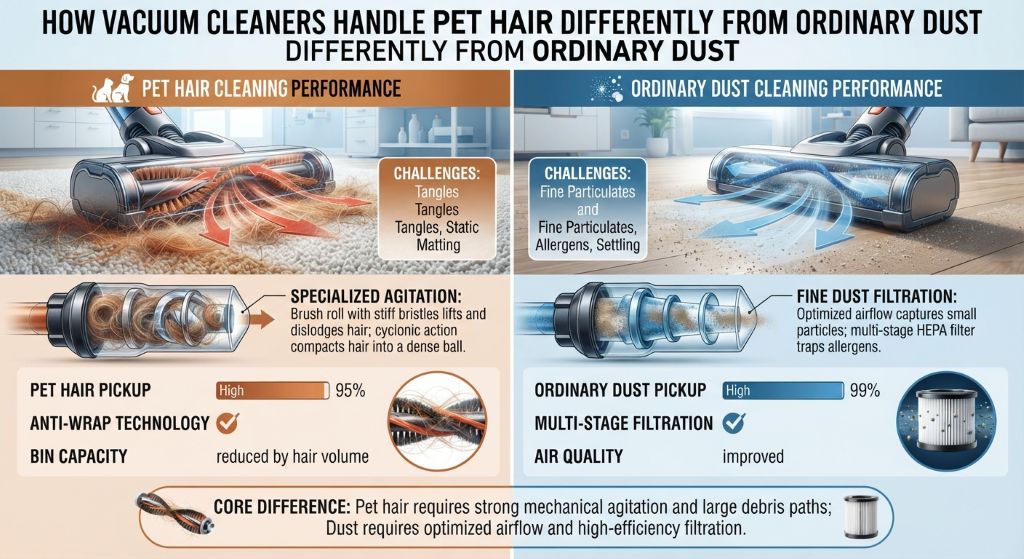
Strong suction helps with pet hair, but it cannot do the job alone. Hair woven into carpet needs loosening before airflow can carry it away. Therefore, suction and agitation must work as a team.
That said, suction still matters in specific ways. Strong airflow pulls loosened strands through the hose before they snag. Additionally, high suction keeps hair moving past hose ridges and wand joints where strands catch.
Cyclonic systems handle hair volume better than bagged designs in one respect. Spinning air drops most fur into the bin before it reaches filters. Meanwhile, bagged machines push all hair through the bag material, which clogs pores faster than dust does.
Watch for these suction-related issues in pet homes:
- Bin filters clogging faster due to fur and dander loads.
- Hoses snagging at bends where clumps gather.
- Pre-motor filters turning gray within weeks.
- Suction fading mid-session as the bin packs down.
Pet hair also packs bins differently. Fur fluffs up and fills space quickly, even when the actual weight is low. Consequently, pet owners empty bins far more often than dust-focused homes. A large bin capacity genuinely helps here.
Additionally, hair mixed with pet kibble crumbs and litter creates heavy debris loads. Therefore, pet vacuums benefit from wider suction channels that pass larger chunks without clogging.
Finally, watch the hose diameter on any pet model. Narrow, ribbed hoses snag fur clumps constantly. Smooth, wide channels carry hair to the bin without stopping.
Filtration and Dander: The Invisible Challenge
Hair is the visible problem, but dander is the invisible one. Pet dander consists of microscopic skin flakes, often under 10 microns. These flakes float in the air for hours before settling.
Dander causes allergies, not just mess. The allergen proteins stick to dander particles and to saliva on fur. According to the American Academy of Allergy, Asthma and Immunology, pet allergens are among the most common indoor triggers. Vacuuming with poor filtration launches these particles back into the air.
This is where filtration grade decides real pet performance. A vacuum with weak exhaust filters stirs dander up during cleaning. Consequently, allergy symptoms can worsen even as floors look cleaner.
Look for these filtration features:
- True HEPA filter rated at 99.97 percent for 0.3-micron particles.
- A sealed body so exhaust passes through the filter.
- Washable pre-filters that catch fur dust before the motor.
- Easy filter access for frequent cleaning.
Sealed systems matter even more for pet homes. Dander particles are small enough to slip through unsealed joints. Therefore, a HEPA filter in a leaky body releases allergens right back into the room.
Additionally, pet homes clog filters faster. Fur dust and dander pack pre-filters within weeks instead of months. Therefore, plan to rinse washable stages every two weeks rather than monthly.
Bagged vacuums deserve a mention here. Some allergy sufferers prefer them for pet homes, because sealed bags capture dander at disposal. Bagless bins puff dander back into the air every time you empty them. Therefore, empty bagless bins outdoors if anyone in the home has allergies.
Specialized Pet Tools and Features
Beyond the main head, pet vacuums earn their name through specialized tools. These attachments target the spots fur loves most: stairs, upholstery, and tight corners.
The mini motorized pet tool leads the list. This small powerhead spins a brush inside a compact head. It beats fur out of couch fabric, car seats, and carpeted stairs. Consequently, it removes embedded fur that a flat crevice tool glides right over.
Here are the tools worth having:
- Mini motorized brush head for upholstery and stairs.
- Crevice tool for baseboards and tight corners.
- Upholstery tool with a lint-catching ribbed strip.
- Extension wand for reaching under beds and furniture.
Some pet models add clever extras. Self-cleaning brush rolls cycle hair straight to the bin. Meanwhile, bags with hygiene seals close shut at removal for dust-free disposal. Others offer scent cartridges to fight pet odor in the exhaust.
However, do not buy tools you will not use. A vacuum stored with its pet head attached gets used far more often than one that needs constant reconfiguring. Therefore, choose a machine where the pet tool attaches in seconds.
Consider your pet’s specific mess too. Long-haired dogs need tangle-resistant rolls above all. Meanwhile, cats demand strong filtration for dander and litter tracking. Small homes with one pet need less capacity than multi-pet houses with heavy shedding seasons.
Maintenance Habits That Keep Pet Vacuums Working
Pet homes punish vacuums harder than dust-only homes. Fur loads bins, wraps brushes, and clogs filters at triple speed. Therefore, pet owners need a stricter maintenance rhythm.
The good news is that each task takes minutes. The key is frequency, not effort. Skipping maintenance in a pet home shows within weeks, not months.
Follow this pet-focused routine:
- Empty the bin after every cleaning session, or daily in shedding season.
- Check the brush roll weekly and cut away wrapped hair.
- Rinse washable pre-filters every two weeks with cold water.
- Dry all washed parts for 24 hours before reuse.
- Replace HEPA filters every 6 months instead of 12.
- Inspect the hose monthly for clumps at the bends.
Additionally, wipe the brush housing monthly. Fur dust mixes with skin oils and forms a sticky film inside the head. A damp cloth removes it easily and keeps the roll spinning freely.
Shedding seasons deserve special attention. Spring and fall coat changes multiply fur volume dramatically. Therefore, double your brush checks and bin emptying during these months. Additionally, quick daily passes with the vacuum beat weekly deep cleans for fur control.
Finally, store the machine empty and dry. Residual fur and dander absorb moisture and create odor. A dry, empty vacuum smells neutral and starts strong every time.
Frequently Asked Questions
Are pet vacuums really different from regular vacuums?
Yes. Pet models add tangle-resistant brushes, stronger filtration, and motorized mini tools. These features target fur wrapping, dander, and fabric-embedded hair that ordinary vacuums handle poorly.
Can pet hair damage a vacuum cleaner?
Over time, yes. Wrapped hair strains the brush motor and belt, while fur dust clogs filters fast. Regular hair removal and filter cleaning prevent most pet-related damage.
Do I need HEPA filtration if I have pets?
Strongly recommended. Pet dander floats in the air and triggers allergies. A true HEPA filter in a sealed body traps those particles instead of returning them to your room.
How often should I empty the bin with pets?
Empty after every session, or daily during shedding season. Fur fills bins fast and packed fur blocks airflow, which weakens suction quickly.
Which tool works best for fur on furniture?
A mini motorized pet tool works best. Its spinning brush beats fur out of fabric weaves where suction-only upholstery tools barely reach.
Conclusion
Pet hair and ordinary dust are two different enemies. Dust lifts easily, while hair weaves, wraps, and clogs at every turn. Therefore, pet homes need machines designed for the fight, not just strong suction. Look for the three pillars of pet performance. A motorized, tangle-resistant brush roll handles woven fur. Strong airflow and wide channels keep strands moving to the bin. Meanwhile, sealed HEPA filtration catches the dander you cannot see. For smaller pet-friendly spaces, you can also pick a cordless vacuum for cat hair in small homes that combines easy handling with effective hair removal.
Maintenance completes the system. Empty bins often, clear brush wraps weekly, and rinse filters on an accelerated schedule. These habits take minutes but decide whether your pet vacuum lasts years or dies early.
Take action today. Flip your vacuum over and check the brush roll for hair wraps. Then rinse the pre-filter while the parts dry overnight. Your floors, your air, and your machine will all thank you.


