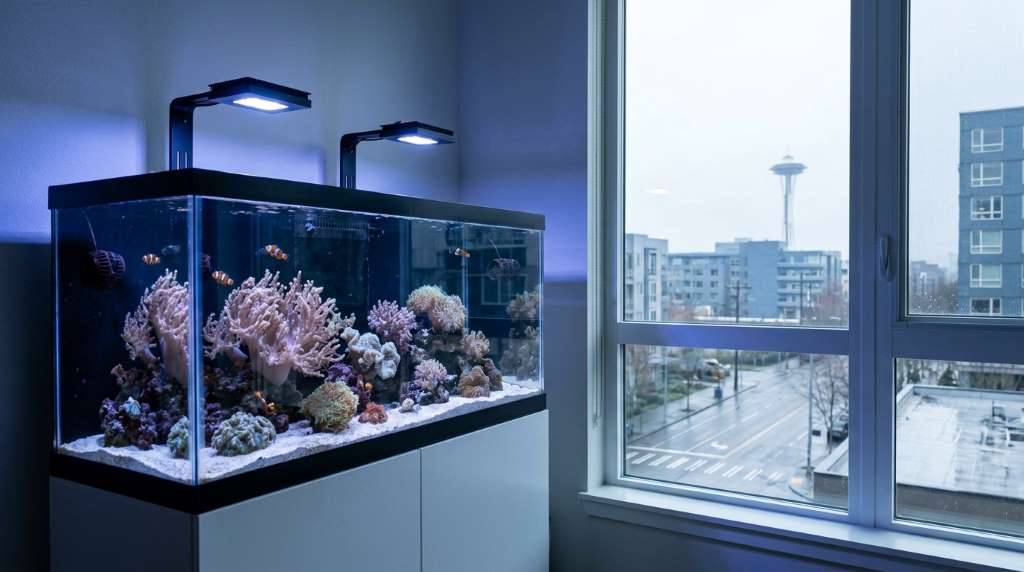
Saltwater aquarium tanks usually smell bad because trapped organic waste, bacterial activity, or poor gas exchange builds foul compounds. In Seattle, maintaining 0 ppm ammonia and regular 10% to 20% water changes can prevent most persistent odors. However, neglected filter media, dying organisms, dirty sand, and an overflowing protein skimmer can quickly change that. Learning how to clear reef tank biofilm also helps remove hidden organic buildup.
Key Takeaways
- Strong odors usually indicate accumulated organic waste or inadequate filtration.
- Rotting food, dead organisms, and dirty filter media can create sulfur-like smells.
- Poor surface agitation can trap gases inside the aquarium water and sump.
- Seattle’s indoor humidity can make aquarium odors linger longer around the room.
- Regular skimmer cleaning prevents concentrated waste from decomposing inside equipment.
- Persistent rotten-egg odors require immediate inspection for anaerobic decay.
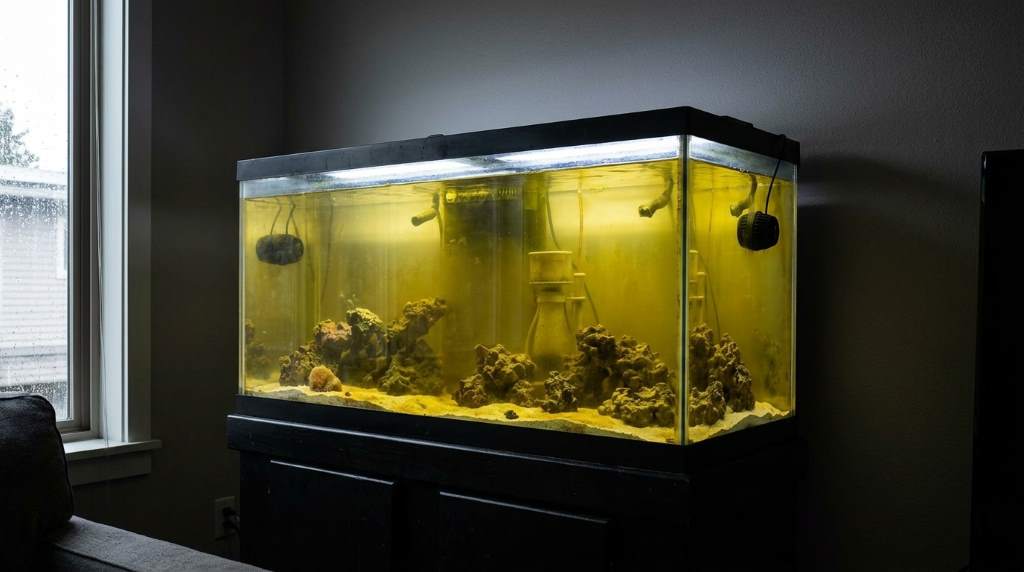
What Causes a Saltwater Aquarium to Smell Bad?
A healthy marine aquarium should have a mild ocean-like scent rather than a strong unpleasant odor. Therefore, a sudden change usually signals accumulating waste, bacterial imbalance, or decaying material.
First, inspect the aquarium for uneaten food, dead snails, dying fish, decaying algae, and trapped debris. These materials release organic compounds as bacteria break them down, especially when water movement remains weak.
Next, check the sump, overflow, filter sock, mechanical media, and protein skimmer cup carefully. These areas collect concentrated waste, so they can smell much worse than the display tank.
Additionally, a neglected sand bed can trap food particles and dissolved organics beneath its surface. Stirring heavily contaminated sand may suddenly release a powerful odor into the surrounding room.
For broader aquarium maintenance, bath in bedroom pros cons offers an unrelated household perspective on moisture and ventilation considerations.
Watch for a Rotten-Egg Smell
A rotten-egg smell deserves special attention because it can indicate hydrogen sulfide formation. This gas can develop when organic material decomposes inside oxygen-poor areas of sand, rock, or filter media.
Do not aggressively disturb a deep, stagnant sand pocket if you notice this odor. Instead, improve circulation gradually and remove contaminated material during a controlled maintenance session.
How Seattle Conditions Can Affect Aquarium Odors
Seattle’s climate can influence how aquarium odors behave inside homes, although the tank itself usually remains the primary source. Cooler outdoor temperatures often encourage homeowners to keep windows closed, reducing natural air exchange around the aquarium.
Furthermore, indoor humidity can make musty or marine odors seem more noticeable. A room with limited ventilation can therefore retain smells that would dissipate quickly elsewhere.
Seattle Public Utilities treats drinking water with chlorine, so untreated tap water should never enter a reef aquarium directly. Always prepare saltwater with properly purified water and remove disinfectants before mixing.
For equipment selection, fix uneven floor methods provides useful household context when evaluating aquarium placement and equipment stability.
Why Ventilation Matters
Place the aquarium where air can circulate freely around the stand, sump, and canopy. However, avoid positioning the tank directly beside a heating vent, drafty window, or exterior door.
A small fan can improve air exchange around the aquarium without creating excessive evaporation. In humid rooms, a properly sized dehumidifier can also reduce persistent musty smells.
Which Aquarium Parts Usually Create the Strongest Smell?
The display tank often receives the blame, but the strongest odor frequently comes from hidden filtration equipment. Consequently, inspect every water-handling component before changing your livestock or performing major chemical treatments.
Start with the protein skimmer because collected skimmate contains concentrated organic waste. Empty and rinse the collection cup regularly, then clean the neck whenever residue begins restricting foam production.
Next, inspect filter socks, sponges, floss, and other mechanical media. These materials can become biological waste traps when aquarists leave them unchanged for too long.
Activated carbon can help control dissolved organic compounds and unwanted odors when used correctly. However, carbon cannot replace mechanical cleaning, biological filtration, water changes, or proper feeding.
If your aquarium needs additional aeration, choose air pump 50 gallon aquarium guidance can help you evaluate airflow requirements.
Inspect the Sump and Overflow
Dead zones inside sumps can accumulate sludge, algae fragments, food particles, and bacterial films. Because these areas receive inconsistent flow, decomposition can continue unnoticed for weeks.
Use a flashlight to inspect chambers, plumbing entrances, return sections, and overflow boxes. Remove visible debris and verify that pumps maintain consistent circulation throughout the system.
Could Your Sand Bed or Live Rock Cause the Odor?
Yes, sand and live rock can contribute to bad aquarium smells when they trap excessive organic matter. However, healthy biological filtration itself should not produce a persistent foul odor.
Fine sand can capture uneaten food and fish waste between grains. Over time, poor circulation can create oxygen-poor pockets where anaerobic bacteria dominate decomposition.
Live rock can develop similar problems when dense structures prevent adequate water movement. Therefore, arrange rockwork with open channels that allow water to move through and around each structure.
How to Clean Smelly Aquarium Sand
Do not completely replace an established sand bed simply because it smells slightly earthy. Instead, siphon small sections during scheduled water changes and observe how the aquarium responds.
Use a gravel vacuum carefully around accessible areas while avoiding unnecessary disturbance beneath stable rock structures. Gradual cleaning removes accumulated waste without creating a sudden biological disruption.
Can Feeding Habits Make a Saltwater Tank Smell?
Absolutely, and overfeeding ranks among the easiest causes to overlook. Excess food decomposes rapidly, increases nutrient availability, and can encourage unwanted bacterial and algae growth.
Feed only what your fish and invertebrates consume promptly. If food remains visible several minutes later, reduce the portion during the next feeding session.
Frozen foods deserve particular attention because thawing liquid can contain concentrated nutrients. Strain heavily polluted thaw water when appropriate, especially in lightly stocked systems.
Build a Cleaner Feeding Routine
- Feed smaller portions rather than one excessive meal.
- Remove uneaten food whenever practical.
- Observe fish behavior before increasing portions.
- Clean feeding tools regularly to prevent residue buildup.
- Adjust feeding amounts after adding or removing livestock.
Also remember that livestock changes alter the aquarium’s biological demand. Adding several fish simultaneously can overwhelm filtration before beneficial bacteria adapt to the increased waste load.
How to Stop a Bad-Smelling Saltwater Aquarium
Begin with a systematic inspection instead of immediately adding odor-control chemicals. A clear diagnosis prevents you from masking the source while the underlying problem continues.
Follow this sequence:
- Remove dead livestock, uneaten food, and visible decaying matter.
- Clean the protein skimmer cup and neck thoroughly.
- Replace or wash dirty mechanical filtration according to its design.
- Inspect the sump, overflow, and return chambers for trapped debris.
- Siphon dirty sections of the substrate gradually.
- Check pumps and powerheads for reduced flow or obstruction.
- Perform an appropriate partial water change using properly mixed saltwater.
- Test ammonia, nitrite, nitrate, phosphate, salinity, and temperature.
Afterward, monitor the odor for several days rather than making multiple drastic changes simultaneously. This approach helps identify which maintenance action actually solved the problem.
Improve Gas Exchange
Strong surface agitation helps exchange oxygen and carbon dioxide between aquarium water and room air. Aim return nozzles toward the surface while maintaining adequate circulation throughout the display.
An appropriately sized air pump can supplement oxygenation when circulation remains insufficient. Nevertheless, correct pump placement and unobstructed water movement should remain your first priorities.
When Does Aquarium Odor Signal a Serious Problem?
A mild marine smell usually does not indicate an emergency, but sudden foul odors deserve immediate investigation. Pay particular attention when the smell accompanies cloudy water, unusual livestock behavior, or unexplained deaths.
Strong ammonia-like odors can indicate a serious nitrogen-cycle problem. Test the water immediately and avoid adding new livestock until ammonia and nitrite return to safe levels.
A powerful rotten-egg smell can indicate anaerobic decomposition and possible hydrogen sulfide production. Investigate stagnant areas carefully, especially beneath deep substrate or inside neglected filtration chambers.
Do not rely on fragrance products to conceal aquarium odors. They may make the room smell different without addressing conditions that threaten fish, corals, and invertebrates.
A Simple Maintenance Schedule for Odor Control
Consistent maintenance works better than occasional deep cleaning because it prevents organic waste from accumulating. Create a routine that matches your aquarium’s livestock load, feeding schedule, and filtration capacity.
| Frequency | Maintenance Task | Primary Purpose |
|---|---|---|
| Daily | Observe livestock and remove obvious waste | Catch problems early |
| Several times weekly | Check skimmer performance and water movement | Maintain filtration efficiency |
| Weekly | Inspect mechanical media and test key parameters | Control nutrient buildup |
| Every 1 to 2 weeks | Perform an appropriate partial water change | Export dissolved waste |
| Monthly | Inspect pumps, tubing, sump, and overflow | Prevent hidden debris accumulation |
Adjust this schedule when your aquarium produces unusually high waste levels. A heavily stocked reef tank may need more frequent mechanical filtration changes and nutrient export.
How to Keep Aquarium Odors Under Control in Seattle
Good aquarium husbandry remains the most reliable odor-control strategy regardless of location. Seattle’s indoor climate simply makes ventilation and humidity management especially worth considering.
Keep the aquarium room reasonably ventilated while protecting the tank from temperature swings. A stable room environment supports livestock health and reduces lingering smells around the aquarium.
Also keep the aquarium stand and surrounding floor dry and clean. Salt creep, damp wood, and dirty equipment can create separate odors that homeowners mistakenly attribute to aquarium water.
Finally, record maintenance dates and water-test results in a simple log. Patterns often reveal that odor appears after missed filter cleaning, heavier feeding, equipment failure, or livestock changes.
Conclusion
A saltwater aquarium smells bad when organic waste, stagnant water, bacterial activity, or decaying material overwhelms normal filtration. In Seattle, limited ventilation and indoor humidity can make those odors linger, but they rarely create the underlying problem.
Start by checking livestock, food, mechanical filtration, skimmer waste, substrate, sump chambers, and circulation. Then restore cleanliness gradually, improve gas exchange, test the water, and maintain a consistent schedule.
Do not simply mask a persistent smell with carbon or air fresheners. Find the source, remove the waste, restore circulation, and maintain the system consistently. That approach protects your aquarium while keeping your Seattle home fresher.
Frequently Asked Questions
Why does my saltwater aquarium smell like rotten eggs?
A rotten-egg smell usually indicates hydrogen sulfide from oxygen-poor areas containing decomposing organic material.
Should a healthy saltwater aquarium have an odor?
A healthy marine aquarium may have a mild ocean-like smell, but it should not produce a strong foul odor.
Can dirty filter socks make an aquarium smell bad?
Yes, dirty filter socks can trap concentrated organic waste and produce strong odors when they remain unchanged too long.
Can poor ventilation make aquarium smells worse?
Yes, limited ventilation can allow aquarium odors and humidity to accumulate inside the room.
How often should I clean my saltwater aquarium?
Perform light maintenance regularly and adjust water changes and filtration cleaning according to livestock and nutrient levels.