
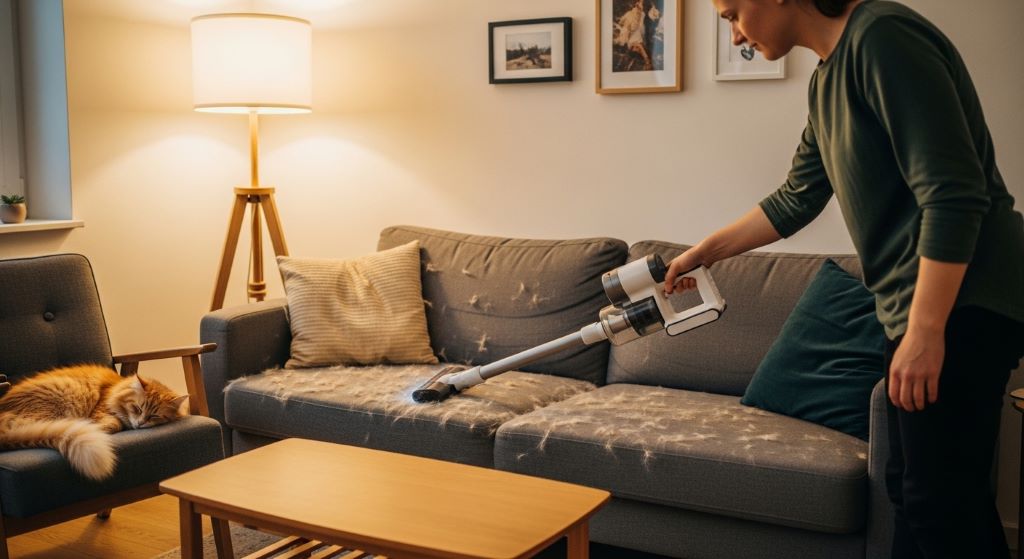
Living with a cat is one of life’s great joys. However, anyone who shares a home with a feline friend knows the daily struggle with pet hair. It lands on sofas, clings to rugs, and somehow finds its way into every corner of the room. For people in small homes or apartments, this challenge is even more pressing because there is less space to hide the mess.
Fortunately, the right vacuum can make the whole experience much easier. A cordless model designed for pet hair can transform your cleaning routine. However, with so many options on the market, choosing the right one can feel overwhelming. Therefore, this guide will walk you through every key factor to consider, so you can find the perfect match for your home and your cat.
Why a Cordless Vacuum Makes Sense for Small Spaces
Small homes come with specific challenges. Storage space is limited. Moving a large, corded vacuum from room to room is inconvenient. Additionally, dragging a cord around tight corners and compact furniture is genuinely frustrating. A cordless model solves most of these problems in one step.
Cordless vacuums are designed for quick, flexible cleaning. You can pick one up, move through your space, and put it back in minutes. There are no outlets to hunt for and no cables to untangle. For a small apartment where every square foot counts, this kind of convenience is invaluable.
Furthermore, a lightweight vacuum is especially practical in a compact home. You can carry it easily between rooms, lift it to clean shelves and upholstery, and maneuver it under low furniture without strain. Weight matters more than many people realize, especially if you clean frequently.
Understanding Cat Hair and What It Takes to Remove It
Cat hair is not like ordinary dust. It is fine, light, and electrostatically charged. This means it sticks to fabric surfaces and embeds itself into carpet fibers rather than sitting loosely on top. A standard vacuum may simply push it around or fail to lift it at all.
Additionally, cats shed differently depending on their breed and the season. Long-haired breeds like Maine Coons and Persians produce thick clumps of fur. Short-haired breeds like Siamese cats shed fine, wispy strands that cling to everything. Therefore, understanding your specific cat’s shedding habits will help you choose a vacuum with the right capabilities.
You also need a vacuum that handles dander, which is the microscopic skin flakes that cats shed along with their fur. Dander is a common allergen. A vacuum with a quality filtration system will capture it rather than blowing it back into the air.
The Most Important Features to Look For
Suction Power and Motor Strength
Suction power is the foundation of any good vacuum. For pet hair, you need consistent, strong suction that can lift embedded fur from carpets and pull hair off upholstery. Look for a model that specifies its suction in pascals. Generally, anything above 15,000 Pa is considered strong for a cordless model.
However, more power does not always mean better results. The design of the cleaning head matters just as much. A motorized brush roll engineered for pet hair will outperform a standard brush head at much higher suction levels. Therefore, always evaluate the complete system, not just the motor specs.
Battery Life and Charging
Battery life is one of the most critical factors in a cordless vacuum. Most models offer between 20 and 60 minutes of runtime on a single charge. For a small home, 20 to 30 minutes is often sufficient. However, if you use a motorized brush head or boost mode, that runtime drops significantly.
Additionally, check how long the vacuum takes to recharge. Some models take four hours or more, while others fully charge in two hours or less. If you clean daily or on short notice, a fast-charging model is far more practical. A rechargeable vacuum with a quick turnaround time suits small homes perfectly.
Some higher-end cordless vacuums include swappable batteries. This means you can keep a spare charged and extend your runtime without waiting. For most small-home users, however, a single long-lasting battery is plenty.
Filtration System
If anyone in your home has allergies, filtration is not optional. Look for a vacuum with a HEPA filter or a sealed HEPA system. HEPA filters capture 99.97 percent of particles as small as 0.3 microns. This includes cat dander, pollen, and dust mites.
A sealed system is even better. It ensures that air passes through the filter rather than leaking around it. Some budget vacuums have HEPA-style filters that are not truly sealed, which reduces their effectiveness. Therefore, look for models that specifically state a sealed HEPA system if allergies are a concern.
Brush Roll Design
Not all brush rolls are equal. Some are designed with bristles that cat hair tangles around easily, creating a frustrating maintenance problem. Look for a brush roll with anti-tangle technology or a self-cleaning base. These designs cut through or prevent hair wrapping, reducing the time you spend clearing blockages.
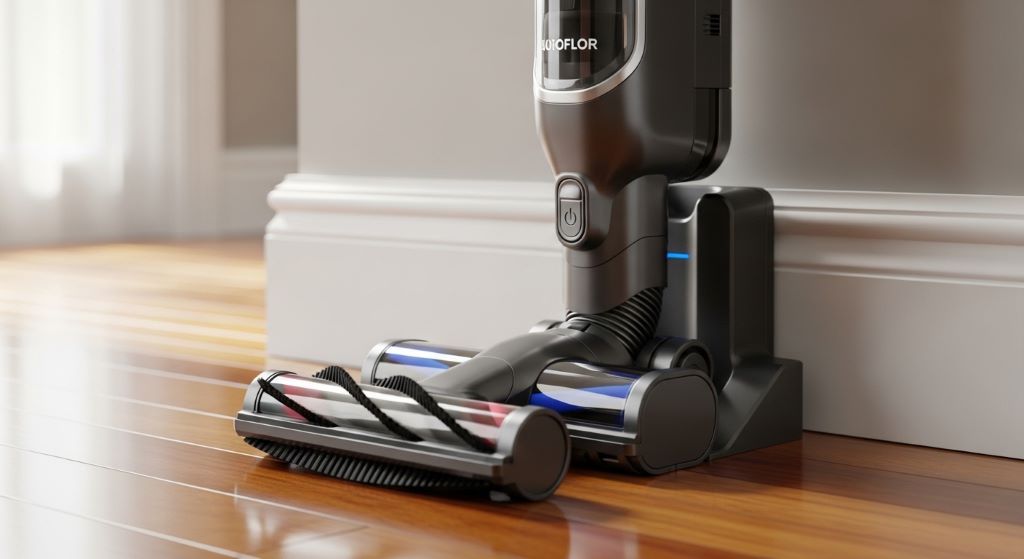
Additionally, some models come with a dedicated soft roller for hard floors. Cat hair on hardwood or tile surfaces behaves differently than on carpet. A soft roller picks it up gently without scattering it around the room.
Dust Cup Capacity
The dust cup on a cordless vacuum is typically smaller than that of a traditional upright model. For cat hair, this can mean emptying it frequently, especially during heavy shedding seasons. Look for a capacity of at least 0.5 liters for a cat-owning household. Anything smaller will need to be emptied mid-clean.
Also consider how easy the dust cup is to empty. A hygienic, one-touch release that dumps debris directly into the bin without your hands touching the contents is a significant advantage when dealing with pet hair and dander.
Attachments and Accessories
The right attachments can take a good vacuum and make it great. For cat owners in small homes, the most useful accessories include:
- A mini motorized tool for upholstery, stairs, and pet beds
- A crevice tool for getting into tight corners and along baseboards
- A soft dusting brush for shelves and delicate surfaces
- A flexible extension hose for reaching under furniture or behind appliances
Additionally, check whether attachments are stored on the vacuum itself or separately. In a small home, losing accessories in a cluttered cupboard is a real inconvenience. On-board storage keeps everything together and ready to use.
Weight and Ergonomics Matter More Than You Expect
Cleaning is a physical task. If your vacuum is heavy or awkward to hold, you will avoid using it. This is a bigger problem than it sounds, because regular cleaning is the only way to stay on top of cat hair. Therefore, ergonomics should be high on your priority list.
A lightweight vacuum that weighs between 1.5 and 2.5 kilograms is ideal for most users. Models in this range are easy to carry up stairs, lift to clean ceilings and vents, and maneuver around furniture without fatigue. Heavier models may offer more power, but they quickly become a burden in daily use.
Additionally, consider the handle design and balance. A well-balanced vacuum with a comfortable grip reduces wrist and arm strain. Some models place the motor weight at the handle end, which makes extended cleaning sessions tiring. Look for reviews that specifically mention comfort and handling.
Hard Floors vs. Carpets: Finding a Vacuum That Does Both
Small homes often have a mix of floor types. You might have hardwood in the living room, a rug in the bedroom, and tile in the kitchen. A good cordless vacuum should handle all of these without you needing to switch between multiple tools.
Look for a model with automatic floor detection or manual power settings. Some vacuums automatically adjust suction and brush roll speed based on the surface. Others require you to switch modes manually. Either approach works well. However, automatic detection is more convenient when you are moving quickly through a small space.
Cat hair on hard floors presents a specific challenge. The hair is light, and a powerful brush roll can actually blow it away rather than picking it up. A gentle mode or a soft roller head solves this problem effectively. Therefore, make sure your chosen model includes settings suitable for bare floors.
Noise Level: A Consideration for Cats and Neighbors
Many cats are sensitive to noise. A loud vacuum can cause stress, especially in a small home where there is nowhere for the cat to escape the sound. Additionally, if you live in an apartment, excessive noise during cleaning can be a problem for neighbors.
Noise levels in vacuums are measured in decibels. Most cordless models fall between 70 and 80 dB. Models below 75 dB are generally considered quieter. While this is not whisper-quiet, it is noticeably less disruptive than many traditional vacuums.
Some manufacturers specifically market quiet operation as a feature. If this is a priority for you, look for that claim backed up by a specific decibel rating. Marketing terms like “quiet” are subjective unless they come with a number.
Budget Ranges: What You Get at Each Price Point
Cordless vacuums for pet hair span a wide price range. Understanding what each range offers will help you set realistic expectations.
- Under $80: Basic suction, shorter battery life, minimal attachments, and standard filtration. Suitable for very light shedders or occasional spot cleaning.
- $80 to $150: Decent suction, 30 to 40 minutes of runtime, a motorized brush head, and HEPA filtration. A solid choice for most cat owners in small homes.
- $150 to $300: Strong suction, 45 to 60 minutes of runtime, anti-tangle brush rolls, sealed HEPA systems, and multiple attachments. Ideal for heavier shedders or allergy sufferers.
- Over $300: Premium build quality, smart features, digital displays, longest battery life, and comprehensive accessory kits. Best for those who want a long-term investment.
For most people living in a small home with one or two cats, the $80 to $150 range offers the best balance of performance and value. However, if allergies are a serious concern, spending more on sealed HEPA filtration is a worthwhile investment.
Top Tips for Maintaining Your Cordless Vacuum
Even the best vacuum will underperform if it is not maintained properly. Cat hair vacuums, in particular, require regular attention. Here are some simple habits that will keep yours working at its best:
- Empty the dust cup after every use. A full cup reduces suction significantly.
- Clean or replace the filter every one to two months, depending on how often you vacuum.
- Check the brush roll weekly for tangled hair. Even anti-tangle models need occasional clearing.
- Store the vacuum fully charged to maintain battery health.
- Wipe down the exterior and attachments monthly to prevent buildup.
Additionally, replacing the filter on schedule is especially important for allergy sufferers. A clogged filter not only reduces suction but also allows fine particles to escape back into the air, defeating the purpose of good filtration entirely.
How to Test a Vacuum Before You Commit
If possible, test the vacuum before buying. Many large home goods stores have display models you can try on floor surfaces. Pay attention to how it handles, how loud it is, and how smoothly the brush head transitions between surfaces.
If you are buying online, which is where the widest selection is usually found, rely on detailed customer reviews. Look specifically for reviews from cat owners. They will note things like how well the vacuum handles pet hair, whether the brush roll tangles, and how the battery holds up over time.
Additionally, check the returns policy before purchasing. A reputable seller will allow you to return the vacuum within a reasonable period if it does not meet your needs. This gives you the freedom to test it in your own home on your actual floors and furniture.
Conclusion
Choosing the right cordless vacuum for cat hair in a small home comes down to a handful of key decisions. You need strong, consistent suction paired with a brush roll designed to handle pet fur. Good filtration is essential, especially if anyone in your home has allergies. Battery life should match your cleaning routine, and the overall design should be comfortable and easy to use every day.
Additionally, think about your specific home. Consider your mix of floor types, the size of your space, and how often you need to clean. A rechargeable vacuum that fits neatly into a small corner and charges quickly will serve a compact apartment far better than a bulky, high-powered model designed for large houses.
The right vacuum will not just keep your home cleaner. It will make the daily reality of living with a cat much more manageable. With the guidance in this article, you now have everything you need to make a confident, well-informed choice.
Frequently Asked Questions
1. How often should I vacuum if I have a cat in a small home?
For most cat owners, vacuuming every two to three days is ideal. During heavy shedding seasons, such as spring and autumn, daily vacuuming may be necessary. The good news is that a quick daily pass with a cordless model takes only a few minutes and prevents hair from building up on surfaces.
2. Can a cordless vacuum replace a traditional upright for cat owners?
For most small-home cat owners, yes. Modern cordless vacuums offer suction power and filtration that rival many traditional models. However, if you have thick, heavily soiled carpets or multiple pets, a corded upright may still outperform cordless options in deep-cleaning scenarios.
3. What is the best battery life for a cordless vacuum in a small home?
For a small home under 60 square meters, 20 to 30 minutes of battery life is usually sufficient. If your home includes multiple rooms or you also clean upholstery and stairs frequently, aim for 40 minutes or more. A fast two-hour charge time makes daily upkeep easy and stress-free.
4. Are HEPA filters necessary for cat owners?
HEPA filters are highly recommended for cat owners, particularly those with allergies or asthma. Cats shed dander along with their fur, and dander is one of the most common indoor allergens. A sealed HEPA filtration system captures these fine particles rather than recirculating them into the air you breathe.
5. Is a lightweight vacuum less powerful than a heavier one?
Not necessarily. Advances in motor and battery technology have made it possible to build a lightweight vacuum with genuinely strong suction. Weight is largely a result of materials and design choices, not motor power. Some of the best-performing cordless vacuums for pet hair weigh under two kilograms while still delivering excellent results on both carpet and hard floors.
Related Topics:
Why Is My Shark Vacuum Not Working? Expert Tips to Diagnose and Fix Issues
Xiaomi Mi Robot Vacuum 2: cleaner, faster, more smart, and more expensive


