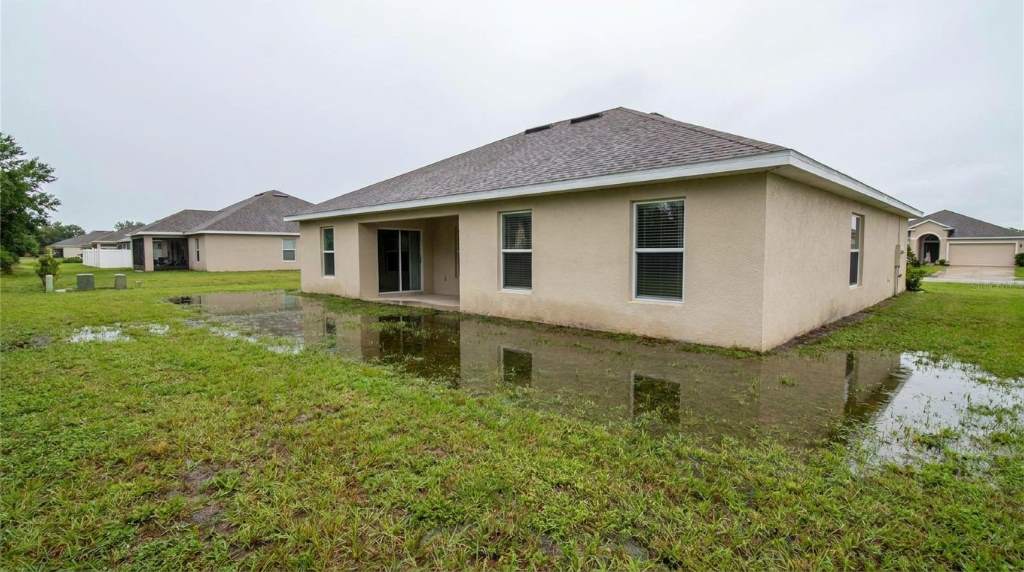
Stop water ponding in Lakeland, FL homes by correcting grading, redirecting downspouts, improving soil infiltration, and maintaining drainage paths. Persistent standing water needs a drainage diagnosis, not another layer of mulch or temporary pumping. Lakeland averages 56.82 inches of precipitation annually, while summer months can bring more than 9 inches monthly. Therefore, even minor drainage defects can become recurring problems. Homeowners should also inspect roofs and mobile home roof leak repair coating when roof runoff contributes to saturation.
Key Takeaways
- Correct the landscape grade so water moves away from the house.
- Extend downspouts and direct roof runoff toward suitable drainage areas.
- Keep swales, drains, gutters, and discharge points clear.
- Test compacted soil before choosing French drains or rain gardens.
- Use permeable surfaces where hardscape creates excessive runoff.
- Investigate recurring ponding before it reaches foundations or living areas.
Start With the Water’s Actual Path
Before digging anything, watch your property during and after a substantial rain. Mark where water enters, where it slows, and where it remains longest. Lakeland itself reports that flat terrain and limited drainage can contribute to flooded yards and homes.
Next, inspect every surface that feeds the wet area. Roofs, driveways, patios, sidewalks, and neighboring properties can concentrate runoff into one low spot. The goal involves controlling that water before it overwhelms the soil.
Walk the property after rainfall and record ponding locations with photographs. Compare those locations with gutters, downspouts, swales, drains, fences, and paved surfaces. This simple map often reveals the problem faster than immediately installing drainage equipment.
Also check whether the water disappears naturally within a reasonable period. A shallow puddle after an intense storm differs from water that remains for days. Persistent saturation usually indicates poor grading, slow infiltration, restricted drainage, or excessive incoming runoff.
For broader maintenance planning, homeowners can review these roof maintenance tips strategies because roof drainage begins above the ground. Keeping gutters and roof outlets functional prevents concentrated discharge from overwhelming one section of the yard.
Fix Grading Before Installing a Drain
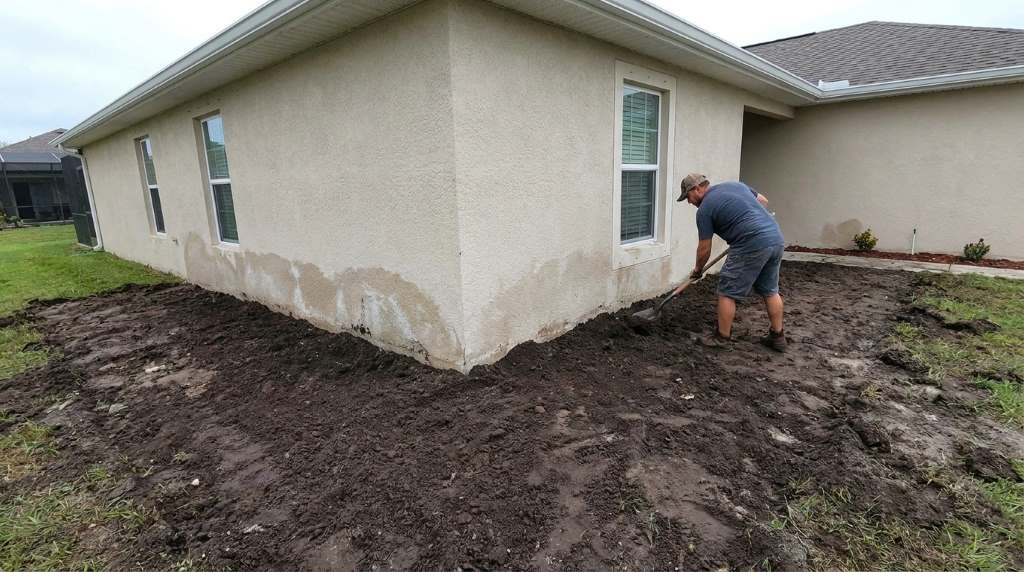
Improper grading ranks among the most important causes of residential ponding. Water naturally follows elevation, so a shallow depression can collect runoff from surprisingly large areas. Regrading can therefore solve the source instead of merely moving accumulated water elsewhere.
Check the Ground Around the House
Inspect the soil immediately beside exterior walls, slabs, crawlspaces, and other vulnerable areas. The surface should encourage water to move away rather than toward the structure. Avoid adding soil blindly because excessive elevation can redirect water toward siding, doors, or neighboring properties.
Use a long level, straight board, or laser level to identify obvious low areas. Measure several points rather than judging the slope visually. Florida properties can appear nearly level while still creating meaningful drainage differences.
When substantial regrading becomes necessary, use a qualified drainage or grading professional. They can evaluate elevations, property boundaries, existing drainage features, and potential impacts on adjacent lots. This approach also reduces the risk of creating a new drainage problem elsewhere.
Preserve Existing Swales
Do not automatically fill a shallow ditch because it looks inconvenient or unattractive. FEMA notes that yards and swales can function as conveyance areas that move water away from buildings.
Instead, keep these pathways open and stable. Remove leaves, sediment, vegetation buildup, and objects that obstruct water movement. If erosion develops, stabilize the channel without eliminating its drainage function.
Fences, sheds, landscaping borders, and retaining features can unintentionally block runoff. Therefore, inspect these structures whenever ponding begins after landscaping changes. A drainage path that worked previously may no longer have a continuous outlet.
Redirect Roof Runoff Before It Reaches Low Areas
Roof runoff can overwhelm a small section of yard when downspouts discharge directly beside the foundation. EPA identifies downspout disconnection and rain gardens as practical residential approaches for managing stormwater.
First, inspect gutters for leaves, sediment, damaged sections, and incorrect slope. Then check each downspout during rainfall to confirm that water exits freely. A clogged gutter can send concentrated water over an edge and create severe localized ponding.
Extend downspouts toward stable, permeable areas whenever site conditions allow. Keep discharge away from foundations, crawlspaces, doorways, and neighboring properties. Use splash blocks or appropriate drainage extensions where they can safely distribute the flow.
However, never redirect water simply toward the nearest property line. Lakeland’s stormwater system ultimately connects with lakes, wetlands, ponds, creeks, canals, and other waterways. Plan discharge so it does not create erosion, nuisance runoff, or pollution.
Use a Rain Garden Strategically
A rain garden can provide a controlled destination for runoff when the site has enough space. EPA describes bioretention areas as engineered depressions that temporarily hold water before infiltration or underdrain discharge.
Place the feature downslope from suitable runoff sources rather than beside vulnerable walls. Before installation, evaluate soil permeability and underground utilities. A poorly placed rain garden can create another wet area instead of solving the original problem.
For larger runoff volumes, consider professional bioretention design rather than a decorative garden alone. EPA cautions that these systems can reduce local flooding but may not provide flood control during extreme storms.
Improve Soil Infiltration Without Guesswork
Sometimes the yard receives manageable rainfall but cannot absorb it quickly enough. Compacted soil, heavy clay layers, construction disturbance, and saturated ground can all slow infiltration. In those situations, improving the soil can complement grading and surface drainage.
Test Before Amending Soil
Dig several small test holes in the affected area and observe how quickly water disappears. Compare wet locations with nearby areas that drain normally. Significant differences can reveal compaction or an underlying soil limitation.
A professional infiltration test provides better information when ponding remains persistent. The results can help determine whether soil amendment, a rain garden, an infiltration trench, or another system makes sense. Avoid selecting drainage equipment solely because a particular product appears popular.
Do not rely on surface mulch to solve deep drainage problems. Mulch can protect soil and reduce erosion, but it cannot create a missing drainage route. Similarly, adding more topsoil can worsen ponding if it raises the wrong area.
Reduce Compaction
Heavy equipment, repeated foot traffic, construction activity, and vehicle parking can compress soil. Compacted ground contains fewer usable pathways for water movement. Aeration and appropriate soil improvement can help where compaction causes the restriction.
Use organic matter carefully and match amendments to the existing soil. Excessive amendment can change drainage behavior without fixing deeper limitations. For major problems, obtain a site assessment before importing large quantities of soil.
Install Drainage When Surface Solutions Fall Short
When grading and runoff control cannot eliminate ponding, a dedicated drainage system may provide the missing pathway. Common options include French drains, catch basins, swales, channel drains, and perforated drainage piping. Each system solves a different hydraulic problem.
A French drain can intercept subsurface or surface water and convey it toward an appropriate outlet. A catch basin works better when surface runoff needs collection at a defined low point. Meanwhile, a swale can move water gradually while allowing some infiltration.
Do not choose a drainage system based only on the amount of standing water. First determine where the water originates and where it can legally and safely discharge. Otherwise, the new system may simply transfer the problem to another location.
Roof design can also influence how much water reaches the ground. For homeowners evaluating different roof configurations, this discussion of box gable roof structural weaknesses provides useful context about roof structure and water management considerations.
Know When Professional Drainage Design Makes Sense
Professional help becomes especially valuable when ponding reaches the foundation or affects several properties. It also matters when drainage requires excavation near utilities, structures, easements, or established trees. Complex sites need measurements rather than visual assumptions.
Ask the contractor to explain the water source, proposed collection point, discharge location, and maintenance requirements. A credible proposal should identify why the existing drainage fails. It should also explain how the proposed system handles ordinary storms and heavier rainfall.
If a project changes established drainage patterns, check applicable local requirements before construction. Lakeland maintains specific stormwater and floodplain programs, while individual properties can have different flood-related conditions.
Keep Hardscapes From Creating New Ponding
Driveways, patios, walkways, and concrete slabs prevent rainfall from infiltrating directly into the ground. EPA explains that impervious surfaces increase stormwater runoff because water cannot readily soak through them.
Inspect paved areas for settled sections that now direct water toward the house. A driveway can develop a low edge after years of settlement, sending runoff into the lawn. Likewise, a patio can lose its intended slope after soil movement beneath it.
Repair or regrade problematic surfaces when practical. Where suitable, permeable paving can reduce runoff by allowing water to infiltrate through the surface. However, permeable systems still require appropriate soil conditions and maintenance.
Keep pavement joints, drains, and nearby collection points clear. Small obstructions can become major restrictions during intense rainfall. Regular cleaning therefore forms part of drainage prevention rather than cosmetic property maintenance.
Build a Lakeland Ponding Prevention Routine
Drainage systems work best when homeowners maintain them before the rainy season becomes demanding. Lakeland receives substantial summer rainfall, with June through September producing particularly high precipitation totals.
Before periods of frequent storms, clean gutters and inspect every downspout connection. Clear visible debris from swales, yard drains, catch basins, and drainage outlets. Then confirm that discharge points remain unobstructed.
After major storms, inspect the same areas again. Look for new erosion, sediment deposits, shifted soil, damaged extensions, and unusually long ponding. Early detection makes minor drainage corrections much easier.
Keep records when the problem returns. Note rainfall intensity, ponding duration, affected locations, and recent landscaping changes. These observations can give a drainage professional valuable evidence during an assessment.
Protect Water Quality While Managing Runoff
Good drainage should move water without carrying unnecessary pollutants into local waterways. Lakeland states that storm drains discharge into natural or constructed water bodies rather than wastewater treatment facilities.
Keep fertilizer, oil, paint, chemicals, grass clippings, and other debris away from storm drains. Never use a storm drain as a disposal route for yard or household materials. Effective drainage management should protect both the property and downstream water resources.
Consider vegetation as part of the drainage strategy where appropriate. Dense plants can slow runoff, protect soil, and support infiltration. EPA recognizes vegetated swales and rain gardens as useful green infrastructure approaches for managing stormwater.
When Water Ponding Signals a Bigger Problem
Some ponding deserves immediate attention rather than routine landscaping. Water against foundation walls, inside crawlspaces, beneath flooring, or near electrical equipment requires prompt investigation. Persistent moisture can also encourage deterioration and create costly secondary damage.
Watch for cracks, damp odors, peeling materials, soil erosion, or unexplained indoor moisture. These signs can indicate that surface ponding has progressed beyond a simple lawn issue. Address the water source before cosmetic repairs conceal the symptoms.
Also investigate sudden drainage changes after nearby construction. New buildings, driveways, walls, landscaping, or grading can redirect runoff toward your property. If another property appears to contribute significant runoff, document the condition before discussing corrective action.
Flood risk deserves separate consideration from ordinary yard ponding. Lakeland provides property-specific flood information that can include flood zones, base flood elevations, design flood elevations, and elevation certificates.
A Practical Order of Operations
Start with observation, then correct the simplest source before installing expensive infrastructure. This sequence reduces unnecessary work and makes each improvement easier to evaluate. It also prevents homeowners from treating symptoms instead of causes.
- Step 1: Map where water enters, collects, and exits the property.
- Step 2: Clean gutters, downspouts, swales, drains, and discharge points.
- Step 3: Correct obvious grading problems around the home.
- Step 4: Redirect roof runoff toward safe, suitable drainage areas.
- Step 5: Test soil where infiltration appears unusually slow.
- Step 6: Add rain gardens, swales, or drainage systems when conditions justify them.
- Step 7: Recheck the property after major storms and adjust maintenance accordingly.
This sequence works because each step addresses a different part of the water cycle. It also helps identify whether the property needs maintenance, grading, infiltration improvements, or engineered drainage. A measured approach usually costs less than repeatedly repairing water damage.
Final Thoughts: Stop Ponding at the Source
Stopping water ponding in Lakeland starts with understanding where water comes from and why it cannot leave. Correct grading, functional gutters, controlled downspouts, healthy soil, and suitable drainage features can work together effectively.
Do not wait until standing water reaches your foundation or becomes a recurring indoor moisture problem. Inspect your property after the next significant storm and identify the first point where water stops moving. If the cause remains unclear, contact a qualified drainage professional for an on-site assessment and a properly designed solution.
Frequently Asked Questions
Why does my Lakeland yard hold water after rain?
Common causes include poor grading, compacted soil, restricted drainage, excessive runoff, and low-lying landscape areas.
Will adding soil stop water from ponding?
Adding soil can help only when it correctly changes the grade without blocking an existing drainage pathway.
Are French drains good for Florida yards?
French drains can work well when properly sized, installed, and connected to a suitable discharge location.
Should downspouts discharge beside my foundation?
No, downspouts should direct roof runoff away from vulnerable foundation areas toward a safe drainage destination.
When should I hire a drainage professional?
Hire one when ponding persists, reaches the structure, affects multiple areas, or requires significant grading or excavation.