
Pet hair has a way of showing up everywhere—on the couch you just vacuumed, the black pants you just washed, and somehow inside the refrigerator. Instead of chasing messes daily, building a manageable weekly routine keeps your home livable without turning cleaning into a second job. A tool like the Shark Navigator Lift-Away for pet hair can handle the heavy lifting on floors and upholstery, but the right tool alone won’t solve the problem. What matters is how you structure your week around your pet’s habits, your home’s surfaces, and the areas that accumulate the most fur.
Quick Answer
Build your weekly routine around three anchors: a daily five-minute reset, a midweek deep clean of high-traffic zones, and a weekend full pass that covers floors, furniture, bedding, and pet items. Vacuum high-shedding areas twice weekly, wash pet bedding every seven to ten days, and keep lint rollers or rubber brushes near problem spots. The goal isn’t perfection—it’s preventing fur and dander from compounding faster than you can remove them.
Key Takeaways
- Prioritize high-shedding zones (entryways, pet beds, sofas) over rarely used rooms when time is limited.
- Vacuum at least twice weekly in main living areas; once weekly is usually enough for low-traffic rooms.
- Wash pet bedding and covers every seven to ten days to control dander and odor, not just visible hair.
- Match tools to surfaces: upholstery brush for sofas, crevice tool for car seats and stairs, hard-floor setting for tile and wood.
- Daily five-minute resets prevent weekly tasks from becoming overwhelming marathon sessions.
Why Weekly Beats Daily (and Why Daily Still Matters)
A weekly routine works because it matches the natural buildup cycle of pet hair and dander. Daily deep cleaning is rarely sustainable, but ignoring buildup for two weeks means allergens and fur embed deeper into fabrics, making each cleaning session longer and less effective. The compromise is a short daily reset paired with structured weekly tasks.
The daily reset takes five minutes or less and typically includes shaking out entryway mats, wiping down pet feeding areas, and running a quick pass with a rubber brush over the couch or a favorite chair. That small effort keeps the weekly deep clean from ballooning into a three-hour job.
Map Your Home Into Cleaning Zones
Not every room needs the same attention. Breaking your home into zones helps you allocate time where it actually matters.
- Zone 1 — Hot spots: Entryways, pet beds, the couch, and the area around food and water bowls. These need the most frequent attention.
- Zone 2 — Living areas: Bedrooms, hallways, and main living rooms where you and your pet spend the most time.
- Zone 3 — Low traffic: Guest rooms, storage areas, and closed-off spaces. These can often go two weeks between cleanings.
On busy weeks, hit Zone 1 thoroughly and Zone 2 lightly. On calmer weeks, rotate through Zone 3 so nothing builds up indefinitely.
A Sample Weekly Schedule You Can Actually Follow
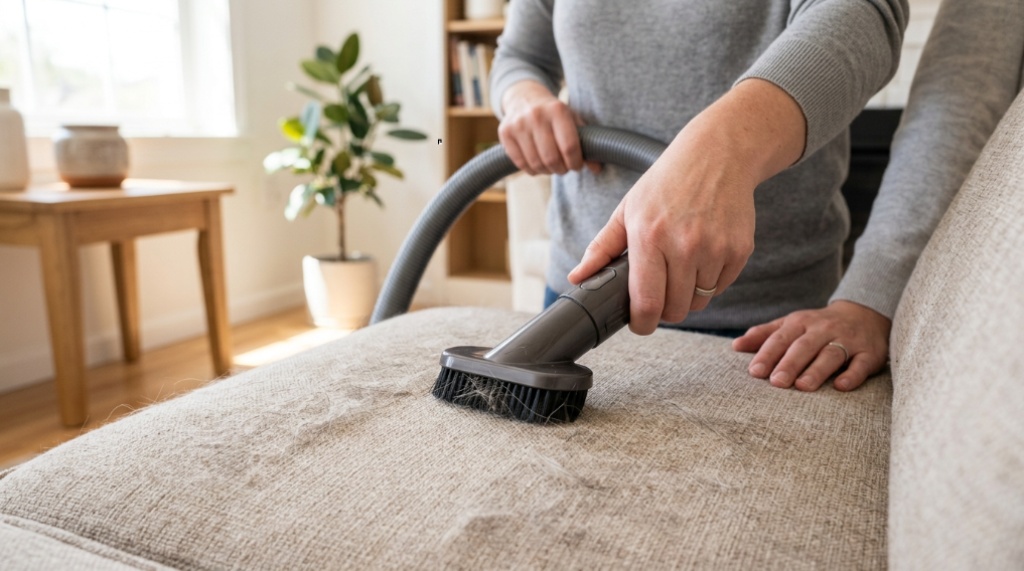
Here’s a practical structure that fits most homes with one or two pets. Adjust the timing to match your schedule—what matters is consistency, not which day you pick.
- Monday: Five-minute reset. Quick sweep of entryway and shake out mats.
- Tuesday: Vacuum Zone 1 rugs and upholstery. Use a crevice tool for sofa seams and under cushions.
- Wednesday: Wipe down hard surfaces, pet bowls, and feeding station. Check litter box or yard area.
- Thursday: Vacuum main living areas and hallways. Empty the canister and rinse the filter if needed.
- Friday: Quick pass on furniture with a lint roller or rubber brush. Spot-clean any accidents or drool marks.
- Saturday: Full clean—vacuum all zones, wash pet bedding, mop hard floors.
- Sunday: Light reset. Restock supplies, check vacuum filters, and plan the coming week.
Some households will need to vacuum every other day during shedding season. Others with short-haired, low-shedding breeds can stretch to once a week in low-traffic zones. Pay attention to how quickly your specific pet’s fur accumulates and adjust accordingly.
Matching Tools to the Job
You don’t need a closet full of gadgets, but the right tool for each surface saves significant time and frustration.
| Surface | Best Tool | How Often |
|---|---|---|
| Carpet and rugs | Upright vacuum with powered brush roll | 2–3 times weekly in hot spots |
| Upholstery and sofas | Upholstery brush attachment or handheld vacuum | Weekly |
| Hard floors | Vacuum on hard-floor setting, then damp mop | Weekly |
| Stairs and car seats | Crevice tool and motorized pet tool | Weekly to biweekly |
| Pet bedding | Washing machine (hot water if fabric allows) | Every 7–10 days |
| Litter area | Scoop daily, full change weekly | Daily and weekly |
For homes with multiple pets or heavy shedders, a vacuum with strong suction and a sealed filtration system prevents dander from being blown back into the air. Lift-away designs are especially useful because you can detach the canister to clean stairs and upholstery without hauling the whole unit.
Common Mistakes That Undermine the Routine
Even well-planned routines fall apart for predictable reasons. Watching for these pitfalls keeps yours on track.
- Skipping the daily reset: Without it, weekly sessions stretch longer and feel overwhelming.
- Vacuuming only visible areas: Under furniture and along baseboards collect the most fur.
- Neglecting filters: A clogged filter reduces suction and pushes allergens back into the room. Check and clean filters monthly, more often during shedding season.
- Washing pet bedding too rarely: Visible hair is only part of the problem; dander and saliva residue build up faster than most people expect.
- Using the wrong attachment: A hard-floor setting on carpet leaves debris behind; a beater bar on delicate rugs can cause damage.
Adapting the Routine to Your Pet and Home
No single schedule fits every household. The variables that matter most are shedding volume, coat type, number of pets, flooring, and whether your pet has access to bedrooms or furniture.
Double-coated breeds like Huskies and German Shepherds typically need vacuuming every other day during seasonal blowouts. Short-haired breeds like Boxers and Beagles shed less visibly but still produce dander that requires weekly attention. Cats often spread litter and hair in tighter patterns around their preferred spots, while dogs tend to track fur along walkways and entryways.
If someone in the home has allergies, increase vacuuming frequency, use a vacuum with HEPA filtration, and wash bedding more often—every five to seven days rather than weekly. Wiping down hard surfaces with a damp cloth also helps because dry dusting just redistributes dander, To tackle stubborn pet hair efficiently on various floors, you can also check out our guide to help you choose an affordable upright vacuum in texas.
Frequently Asked Questions
How often should I vacuum with a pet in the house?
Vacuum main living areas at least twice weekly and high-shedding zones like pet beds and sofas every two to three days during heavy shedding seasons. Low-traffic rooms can usually wait a week or longer.
Is a regular vacuum enough for pet hair, or do I need a pet-specific model?
Many standard vacuums handle pet hair, but models designed for pet households typically offer stronger suction, specialized attachments, and better filtration. A pet-specific vacuum reduces the time spent re-cleaning the same surface.
What’s the best way to remove pet hair from furniture?
Start with a vacuum upholstery attachment to lift embedded hair, then follow with a rubber brush or damp rubber glove to gather remaining strands. For stubborn fur, a lint roller works well on smaller areas.
How do I keep pet odor from building up between cleanings?
Wash pet bedding weekly, air out rooms when possible, wipe down hard surfaces, and use a vacuum with sealed filtration. Baking soda sprinkled on carpets before vacuuming can help neutralize lingering smells.
Should I clean differently for cats versus dogs?
The core routine is similar, but cats scatter litter around their box and tend to leave hair in concentrated spots. Dogs typically spread fur along walkways and entryways. Adjusting your hot-spot focus based on your pet’s habits saves time.
How do I manage shedding season without cleaning every day?
Increase vacuuming frequency temporarily, brush your pet outdoors more often, and wash bedding every five to seven days until shedding subsides. A daily five-minute reset becomes more important during these weeks.
Conclusion
An effective weekly cleaning routine with pets comes down to consistency and prioritization, not perfection. Focus on the zones where fur and dander accumulate fastest, keep a short daily reset going, and adjust frequency based on your pet’s shedding patterns. The right vacuum, a few well-chosen tools, and a realistic schedule will keep your home comfortable without consuming your entire week. Start with one zone this week, build the habit, and expand from there.